



There are few things as unsettling for a homeowner as a sudden electrical issue. Whether it is a breaker that constantly trips, lights that flicker ominously when the refrigerator turns on, or a complete loss of power in half of your house, electrical problems disrupt your life and pose severe safety risks. When faced with these situations, your first instinct is likely to pick up your phone and search for an electrician near me. Find the best electrician Highlands Ranch CO.
However, typing that phrase into a search engine is only the first step. Understanding why a local expert is your best asset, how to vet their qualifications, and what to expect regarding costs, safety standards, and modern upgrades can transform a stressful emergency into a smooth, manageable process.
This comprehensive guide will explore the undeniable benefits of hiring local electrical professionals. We will delve deeply into troubleshooting common household electrical problems, understanding the financial aspects of electrical repairs, navigating home renovations, and ensuring your home remains a safe, modern sanctuary.
1. The Unmatched Value of Hiring a Local Electrician
When you need electrical work done, you generally have two options: hiring a large, national franchise or choosing a local, community-based contractor. While national chains have their merits, there are distinct, powerful advantages to selecting a local electrician.
Lightning-Fast Response Times
Electrical issues do not respect your schedule. When a vital circuit fails, you need someone who can reach your property quickly. Local electricians are already in your area, navigating familiar roads and avoiding the lengthy dispatch times often associated with out-of-town companies. This proximity is not just convenient; in an emergency, it can be life-saving.
Intimate Knowledge of Local Geography and Grids
A local professional understands the specific nuances of your municipality’s power grid. They know if your neighborhood is prone to power surges due to aging municipal infrastructure or if homes in your specific subdivision were built during an era with questionable wiring practices (such as the widespread use of aluminum wiring in the 1960s and 70s).
Community Accountability and Reputation
When finding reputable local electrical contractors, you benefit from community accountability. A local business relies heavily on word-of-mouth referrals and local online reviews. Unlike transient contractors who might do subpar work and leave town, a community-based electrician has a vested interest in maintaining a sterling reputation. They are your neighbors, and their business survives on trust, integrity, and high-quality workmanship.
2. Handling the Unexpected: Electrical Emergencies
Not every electrical issue can wait until Monday morning. Understanding what constitutes an emergency and knowing who to call can prevent property damage and keep your family safe.
What Constitutes an Electrical Emergency?
It can be challenging to differentiate between a minor inconvenience and a full-blown hazard. You need an emergency electrician immediately if you experience any of the following:
- Burning Smells: An acrid, fishy, or burning plastic odor near outlets or breaker panels indicates melting wire insulation.
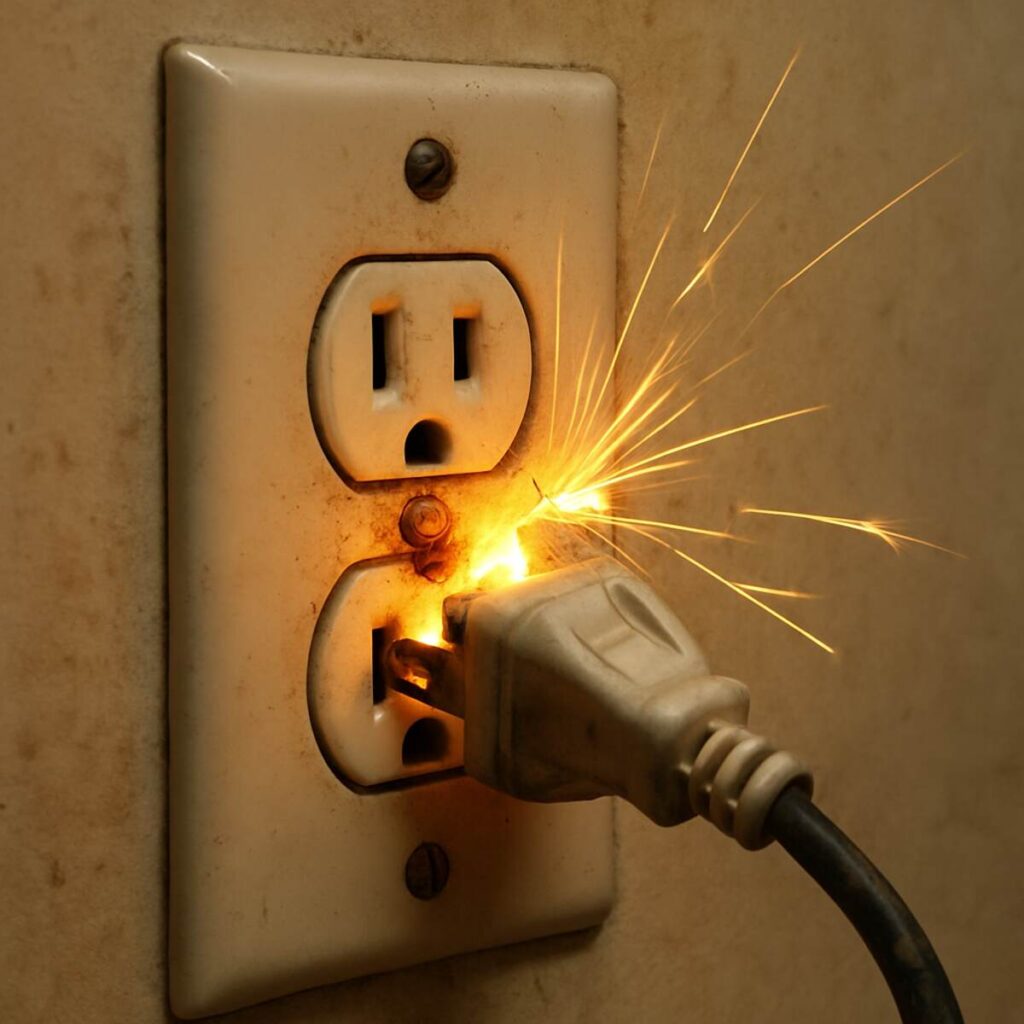
- Sparking or Arcing: If you see sparks when plugging in an appliance or hear a buzzing/crackling sound from behind a wall, a fire hazard is imminent.
- Smoking Outlets: Smoke of any kind is a definitive sign of active combustion.
- Sudden, Unexplained Power Loss: If your home loses power while the rest of the neighborhood remains lit, and resetting the breaker does nothing, you have a critical failure.
- Water Leaks Near Electrical Panels: Water and electricity are a deadly combination. A flooded basement with submerged outlets requires immediate professional intervention.
The Lifeline of 24/7 Availability
Electrical fires and catastrophic panel failures often happen in the dead of night. Having access to 24/7 emergency electrical repair services is a cornerstone of home safety. These specialized technicians are on standby to diagnose and mitigate immediate dangers. While emergency after-hours calls carry a premium rate, the cost is negligible compared to the devastating aftermath of an electrical fire.
Actionable Tip: While waiting for your emergency responder, never attempt to touch a sparking panel or smoking outlet. If it is safe to do so, turn off the main power breaker to the house, evacuate the immediate area, and keep a fire extinguisher (Class C for electrical fires) nearby just in case.
3. Decoding Credentials: Who is Working on Your Home?
Electricity is inherently dangerous. It is not a trade where “learning on the job” inside a client’s home is acceptable. Understanding the hierarchy of electrical qualifications ensures you are hiring a competent professional.
Master Electrician vs Journeyman Qualifications
When researching an “electrician near me,” you will frequently encounter the terms “journeyman” and “master.” Understanding the master electrician vs journeyman qualifications is crucial for hiring the right person for your specific project.
- The Apprentice: Every electrician starts here. Apprentices work under the direct supervision of a journeyman or master, accumulating thousands of hours of hands-on experience and classroom instruction. They do not work independently.
- The Journeyman: After completing a rigorous apprenticeship (typically 4 to 5 years, or roughly 8,000 hours) and passing a state or local licensing exam, an apprentice becomes a journeyman. A journeyman is highly skilled and legally permitted to work independently on residential and commercial projects. They can install wiring, troubleshoot issues, and read blueprints.
- The Master Electrician: This is the pinnacle of the profession. To become a master, a journeyman must work an additional 4,000 to 8,000 hours (depending on state laws) and pass a tremendously difficult examination covering advanced electrical theory, deep knowledge of the National Electrical Code (NEC), and safety protocols. Master electricians are qualified to pull permits, design complex electrical systems, and oversee large teams of journeymen and apprentices. For complex home renovations or panel upgrades, having a master electrician overseeing the project is highly recommended.
How to Check Electrician License and Insurance
Never take a contractor’s word for it when it comes to their legal right to work. Knowing exactly how to check electrician license and insurance is a non-negotiable step in the hiring process.
- Ask for the License Number: A legitimate contractor will gladly provide this. It is often printed on their business cards, work vehicles, and website.
- Visit Your State’s Licensing Board: Every state (and some local municipalities) has a Department of Professional Regulation or a State Contractor’s Board website. Use their online search tool to input the license number. Ensure the license is active, current, and has no pending disciplinary actions.
- Request a Certificate of Insurance (COI): You must verify that they carry both General Liability Insurance (which pays for damages to your home if they make a mistake) and Worker’s Compensation Insurance (which covers the electrician if they are injured on your property). Ask the contractor to have their insurance agent email you a COI directly. This prevents unscrupulous individuals from handing you a forged or expired document.
4. The Economics of Electrical Work: Understanding Costs
Budgeting for home maintenance can be stressful, especially when dealing with the unseen wires behind your walls. Being transparent about costs helps homeowners make informed decisions.
Average Hourly Rate for Licensed Electricians
Labor costs vary wildly depending on your geographic location, the complexity of the job, and the experience level of the technician. However, understanding the average hourly rate for licensed electricians provides a helpful baseline.
Typically, you can expect to pay anywhere from $75 to $150 per hour for a licensed journeyman. If a master electrician is required on-site, that rate can climb to $120 to $200+ per hour. Keep in mind that the first hour often costs more to cover travel time and fuel expenses. Emergency, weekend, or holiday calls usually carry a “time-and-a-half” or “double-time” premium.
Unpacking Diagnostic Fees for Electrical Inspections
Many homeowners are frustrated when a contractor charges a fee just to “look at the problem.” However, diagnostic fees for electrical inspections are a standard and necessary industry practice.
When your power goes out in half the living room, the solution might be a simple loose wire, or it could be a degraded breaker, a severed line behind the drywall, or a failing neutral connection at the meter. The electrician is utilizing years of specialized training and expensive, highly calibrated testing equipment (like multimeters, circuit tracers, and megohmmeters) to locate an invisible problem safely. The diagnostic fee (usually ranging from $80 to $150) covers this expert investigative work. Most reputable companies will waive or apply this fee toward the cost of the repair if you hire them to fix the issue.
The Cost to Upgrade Residential Electrical Panel
One of the most significant and vital investments you can make in an aging home is a panel upgrade. Homes built decades ago were designed to handle 60 to 100 amps of total power. Today, with multiple televisions, central air conditioning, high-end kitchen appliances, and home offices, modern homes require at least a 200-amp service.
The cost to upgrade residential electrical panel typically ranges from $1,500 to $4,000. Several factors influence this wide price range:
- Amperage Required: Upgrading from 100 amps to 200 amps is standard. Upgrading to a massive 400-amp service for a luxury home or workshop will cost significantly more.
- Location of the Panel: If the panel must be moved to comply with modern fire codes (e.g., moving it out of a small closet or a bathroom), labor costs will rise due to the need to splice and extend every existing circuit.
- Condition of the Service Drop: Sometimes, upgrading the panel requires the utility company to install a thicker service drop cable from the street pole to your home, which may require a new exterior meter box and weatherhead.
- Smart Panels: If you opt for a cutting-edge “smart panel” (like those made by Span or Leviton) that allows you to monitor and control individual circuits via a smartphone app, expect the hardware costs to push the total project closer to $5,000 or more.
5. Troubleshooting Home Electrical Issues
While you should never attempt dangerous DIY electrical repairs, being able to identify problems and perform basic troubleshooting can save you time, money, and stress.
Troubleshooting Frequent Circuit Breaker Trips
A tripped breaker is generally a safety mechanism functioning exactly as intended. However, troubleshooting frequent circuit breaker trips is necessary when the same switch flips repeatedly. There are three main culprits:
- Circuit Overload: This is the most common cause. If you have a space heater, a high-end gaming PC, and a vacuum cleaner all running on a single 15-amp circuit, the wires will overheat. The breaker detects this excess heat and trips to prevent a fire. Fix: Redistribute heavy appliances to different circuits.
- Short Circuit: This occurs when a “hot” wire touches a “neutral” wire. This creates a path of least resistance, causing a massive surge of current that instantly trips the breaker. Short circuits are often accompanied by a popping sound or a burning smell. Fix: This is dangerous. Unplug everything on the circuit. If it trips immediately upon being reset while empty, call a professional.
- Ground Fault: Similar to a short circuit, this happens when a hot wire touches the ground wire or the metal side of an outlet box. This is highly dangerous as it can electrify metal surfaces. Fix: Requires a licensed electrician to trace and repair the fault.
When to Call an Electrician for Flickering Lights
A single flickering bulb usually means it just needs to be tightened or replaced. But when to call an electrician for flickering lights becomes a pressing question when the issue is systemic.
- When a Major Appliance Turns On: If the lights dim for a split second when your AC unit kicks on, it is usually normal. Heavy motor loads require a massive initial surge of power. However, if the lights stay dim, your panel may be undersized, or you might need a “hard start kit” for the AC.
- Flickering Throughout the Entire House: This is a major red flag. It often points to a loose neutral connection either in your main panel or at the utility meter outside. A loose neutral can cause erratic, dangerously high voltage fluctuations capable of frying your electronics and causing a fire. Call an emergency technician immediately.
- Flickering in Just One Room: This usually indicates a loose connection at the switch, a degrading wire nut behind the drywall, or an overloaded circuit. A local electrician can trace this down quickly.
Common Signs of Faulty Home Wiring
Wiring degrades over time. Recognizing the common signs of faulty home wiring allows you to catch minor issues before they become catastrophic:
- Hot Outlets or Switches: Wall plates should never feel warm to the touch. If they do, current is “leaking” or encountering severe resistance due to loose connections.
- Discolored or Scorched Outlets: Brown or black marks around the slots of an outlet are definitive proof of internal arcing (miniature electrical fires).
- Buzzing Sounds: Electricity should be silent. A hum or buzz from an outlet or panel means alternating current is physically vibrating a loose metal component.
- Frequent Bulb Burnouts: If you find yourself replacing LED or incandescent bulbs in the same fixture every few weeks, the fixture may be receiving too much voltage or have a loose connection causing micro-surges.
6. Proactive Safety Measures: Protecting Your Family and Property
Electricity is safely contained only when proper materials and devices are utilized. Proactive safety measures are an investment in your peace of mind.
Preventing Electrical Fires in Older Homes
Homes built before 1980 hold historic charm but often hide terrifying electrical secrets. Preventing electrical fires in older homes requires a specific understanding of outdated technologies.
- Knob and Tube Wiring: Common in homes built before the 1950s, this system uses ceramic knobs to run single wires through framing. It lacks a ground wire entirely, making it highly susceptible to faults, and its cloth insulation degrades into dust over time. Most insurance companies will refuse to write a policy on a home with active knob-and-tube wiring. It must be completely replaced.
- Aluminum Wiring: During a copper shortage in the 1960s and 70s, builders turned to aluminum wiring. The problem? Aluminum expands and contracts at a different rate than the copper and brass terminals it connects to. Over time, these connections vibrate loose, creating severe arcing and fire risks. A local electrician can mitigate this without tearing open all your walls by using specialized “pigtailing” connectors (like AlumiConn) to safely bond the aluminum wire to short copper ends.
- Outdated Panels: Brands like Federal Pacific Electric (FPE) and Zinsco, installed millions of times in the mid-20th century, have notorious design flaws where the breakers simply refuse to trip during an overload. These panels are ticking time bombs and must be replaced immediately.
The Benefits of Professional Surge Protection Installation
Many homeowners believe the cheap, $15 plastic power strip under their desk provides adequate surge protection. This is a dangerous misconception.
The benefits of professional surge protection installation extend to your entire property. A whole-home surge protector is hardwired directly into your main electrical panel by a licensed pro.
- Protection Against Grid Fluctuations: While lightning strikes get all the attention, 80% of power surges are actually generated internally (when heavy appliances turn on/off) or by minor grid fluctuations from the utility company.
- Protecting Microprocessors: Modern homes are filled with delicate microprocessors. Your smart refrigerator, your washing machine, your HVAC thermostat, and your LED lighting all contain sensitive computer chips that can be degraded or destroyed by repeated, minor surges.
- Cascading Defense: A whole-home unit acts as a massive sponge, clamping down on massive voltage spikes before they can ever enter your home’s branch circuits. Combining a panel-mounted protector with high-quality point-of-use power strips provides an impenetrable shield for your electronics.
GFCI and AFCI Technologies
Ground Fault Circuit Interrupters (GFCIs) and Arc Fault Circuit Interrupters (AFCIs) are modern marvels of electrical safety.
- GFCIs: Required in any area where water and electricity might mix (kitchens, bathrooms, garages, outdoors), GFCIs monitor the current going out and coming back. If even a tiny fraction of a milliamp goes missing (perhaps through your body into the ground), the outlet shuts off power in 1/40th of a second, preventing electrocution.
- AFCIs: Now required in almost all living spaces by modern electrical codes, AFCIs monitor the wave-form of the electricity. If they detect the specific, erratic electrical signature of an “arc” (a spark jumping across a broken wire behind your drywall), they trip the circuit, stopping a fire before it starts.
7. Home Renovations and Modern Upgrades
Upgrading your home is exciting, whether you are remodeling a kitchen, finishing a basement, or bringing your house into the 21st century with smart tech. However, electrical work during renovations requires strict adherence to regulations.
Electrical Permit Requirements for Home Renovations
It is tempting to skip the bureaucracy and have a friend do the wiring for your basement remodel. Do not do it. Understanding electrical permit requirements for home renovations is critical for legality, safety, and your property value.
Almost any electrical work that involves running new wire, adding new circuits, or moving a panel requires a permit from your local building authority. Minor jobs, like swapping a light fixture or replacing an existing outlet, usually do not.
Why are permits so crucial?
- Safety Oversight: Pulling a permit requires an independent city or county inspector to review the electrician’s work before the walls are closed up. This ensures the work meets strict code standards.
- Homeowners Insurance: If an unpermitted electrical job causes a fire, your homeowners’ insurance provider is entirely within their rights to deny your claim, leaving you financially ruined.
- Resale Value: When you go to sell your home, buyers’ inspectors will look for unpermitted work. If found, it can stall the sale, force you to tear open walls for retroactive inspections, or require you to lower your asking price substantially.
Smart Home Lighting System Integration
The modern home is automated, efficient, and highly customizable. The demand for smart home lighting system integration has skyrocketed, but it is rarely a simple DIY plug-and-play project.
Upgrading to smart switches (like Lutron Caséta, Kasa, or GE Cync) allows you to control your home’s lighting via voice commands (Alexa, Google Home), set complex schedules, and control lights remotely via smartphone apps to simulate occupancy while you are on vacation.
However, a professional local electrician is often needed for this integration due to the “Neutral Wire Requirement.” Most older homes were wired with “switch loops” that only brought the hot wire down to the wall switch. Smart switches, because they possess internal radios that must remain constantly powered even when the light is “off,” require a dedicated neutral wire. An electrician can safely pull a new neutral wire to your switch boxes or install specialized, high-end “no-neutral” smart switch systems that require specific minimum load calculations to function without flickering.
EV Chargers and Future-Proofing
As the world shifts toward sustainable energy, installing an Electric Vehicle (EV) charger is becoming a standard home upgrade. A Level 1 charger (plugging into a standard outlet) is agonizingly slow. Installing a Level 2 charger requires a dedicated 240-volt, 40-to-60 amp circuit—similar to what an electric oven uses. This massive continuous draw often necessitates a panel upgrade and meticulous load calculation by a professional to ensure your home’s service can handle charging a vehicle without plunging the rest of the house into darkness.
8. The Technical Divide: Commercial vs Residential Standards
As you look for an “electrician near me,” you will notice contractors categorized as residential, commercial, or industrial. It is vital to hire the right specialist. A master of industrial robotics wiring may not be the best choice for fishing a delicate wire through your 100-year-old plaster ceiling.
Understanding the basic differences in commercial vs residential electrical code standards highlights why specialization matters.
Phase and Voltage Differences
- Residential: Most single-family homes run on a single-phase, 120/240-volt system. This is sufficient for lighting, standard appliances, and heavy hitters like HVAC systems and dryers.
- Commercial: Office buildings, restaurants, and retail spaces often require three-phase power. This system provides a more consistent, dense flow of electricity, usually at 120/208 volts or even 277/480 volts. Three-phase power is necessary to run large commercial refrigeration units, massive rooftop HVAC chillers, and heavy machinery efficiently.
Wiring Methods and Materials
- Residential Wiring: In homes, wires are typically bundled in a flexible, non-metallic sheathing known commercially as Romex (NM-B cable). This cable is snaked through the wooden studs behind drywall. It is cost-effective, easy to route, and safe when protected by wall materials.
- Commercial Wiring: Because commercial buildings have drop ceilings, exposed areas, and higher risks of physical damage, the NEC strictly prohibits exposed Romex in most commercial applications. Wires must be pulled through rigid or flexible metal conduits or use metal-clad (MC) armored cables. Bending conduit requires specific mathematical skills, specialized tools, and a different set of physical techniques than residential wire pulling.
Load Demands and Accessibility
Commercial codes demand incredibly strict load calculations. A restaurant kitchen, for instance, has a massive, continuous electrical draw compared to a residential kitchen. Furthermore, commercial codes prioritize accessibility and emergency safety. Exit signs, emergency egress lighting systems with battery backups, and highly specific panel clearances are rigorously enforced by fire marshals in commercial spaces.
By hiring a residential specialist for your home, you ensure you are getting an expert intimately familiar with the nuances of wood-framed construction, residential load calculations, and the specific aesthetic demands of homeowners.
9. The Ultimate Checklist: Finding Reputable Local Electrical Contractors
You now understand the mechanics, the costs, and the safety requirements of electrical work. The final step is putting this knowledge into action. When searching for an “electrician near me,” use this rigorous checklist to guarantee you are finding reputable local electrical contractors who will treat your home with respect and expertise.
- Check Local Reviews, But Read Between the Lines: Do not just look at the star rating on Google or Yelp. Read the actual reviews. Look for comments that mention the technician’s punctuality, cleanliness (did they wear shoe covers and vacuum up their drywall dust?), and communication skills. A contractor who takes the time to explain the problem simply is a contractor worth keeping.
- Verify Licensing and Insurance: As detailed in Section 3, physically verify their state license number and request that COI.
- Ask About Warranties: A confident electrician backs up their labor. While materials (like breakers or light fixtures) are covered by manufacturer warranties, ask the contractor if they offer a 1-year or 2-year warranty on their actual labor and installation quality.
- Request Detailed, Itemized Estimates: For larger jobs (like panel upgrades or rewiring), demand an estimate that breaks down materials, labor, and permit fees. Avoid contractors who give you a single, vague lump-sum number scribbled on a notepad.
- Assess Their Communication: How long did it take for them to return your initial call? Was the dispatcher polite? Did the technician show up in a marked, professional vehicle wearing a uniform? These small details are indicative of how the business is run as a whole. A disorganized front office often equates to disorganized, sloppy electrical work.
- Avoid the Lowest Bidder: If you get three quotes for a panel upgrade ($2,500, $2,700, and $1,200), throw out the lowest bid immediately. Extremely low bids usually mean the contractor is uninsured, unlicensed, planning to use counterfeit or substandard materials, or intends to skip pulling the mandatory municipal permits. In electrical work, you truly get what you pay for, and bargain-hunting can lead to devastating consequences.
Conclusion
The phrase “electrician near me” is more than just a search query; it is your gateway to securing the safety, functionality, and modern convenience of your home. Electricity is the invisible heartbeat of our daily lives, powering our work, our comfort, and our entertainment. When that heartbeat falters, entrusting its repair to a highly qualified, local professional is the smartest investment you can make.
By understanding the vital differences in electrician qualifications, budgeting for realistic diagnostic and repair costs, recognizing the early warning signs of faulty wiring, and insisting on proper permits for modern upgrades, you transition from a reactive homeowner to a proactive protector of your property.
Whether you are facing a terrifying midnight power failure requiring an emergency response, or you are simply looking to bring your aging home into the smart-technology era, rely on the trusted, licensed experts in your community. They bring not just their tools, but a localized dedication to keeping your family safe, well-lit, and fully powered for years to come.