


Tired of spending the first twenty minutes of game night explaining complicated rules? Churee is a fun, low-pressure alternative. As one of the most beloved traditional Nepali card games, Churee is a simple “fishing” style matching game that’s incredibly easy to learn, making it perfect for any social gathering. This guide covers the fundamentals, from setup and scoring to fun variations. All you need is a standard deck of cards, a few friends, and a willingness to have a little fun capturing cards. To know more, check out akongcuan
What You’ll Need to Play Your First Game of Churee
To get a game of Churee started, you only need three things:
- A standard 52-card deck (no Jokers needed).
- 2 to 4 players (3 is often best!).
- A flat surface to play on.
Churee works well with two, three, or four people, making it a flexible choice for small groups. While a 2-player game is a great head-to-head battle, many fans find the sweet spot is with three players, which creates the perfect balance of strategy and unpredictable fun.
Regardless of how many people are playing, the objective is simple: capture more cards than anyone else. At the end of each round, you’ll count the cards in your personal capture pile. The player with the most cards wins!
How to Set Up the Game: Dealing the Cards Correctly
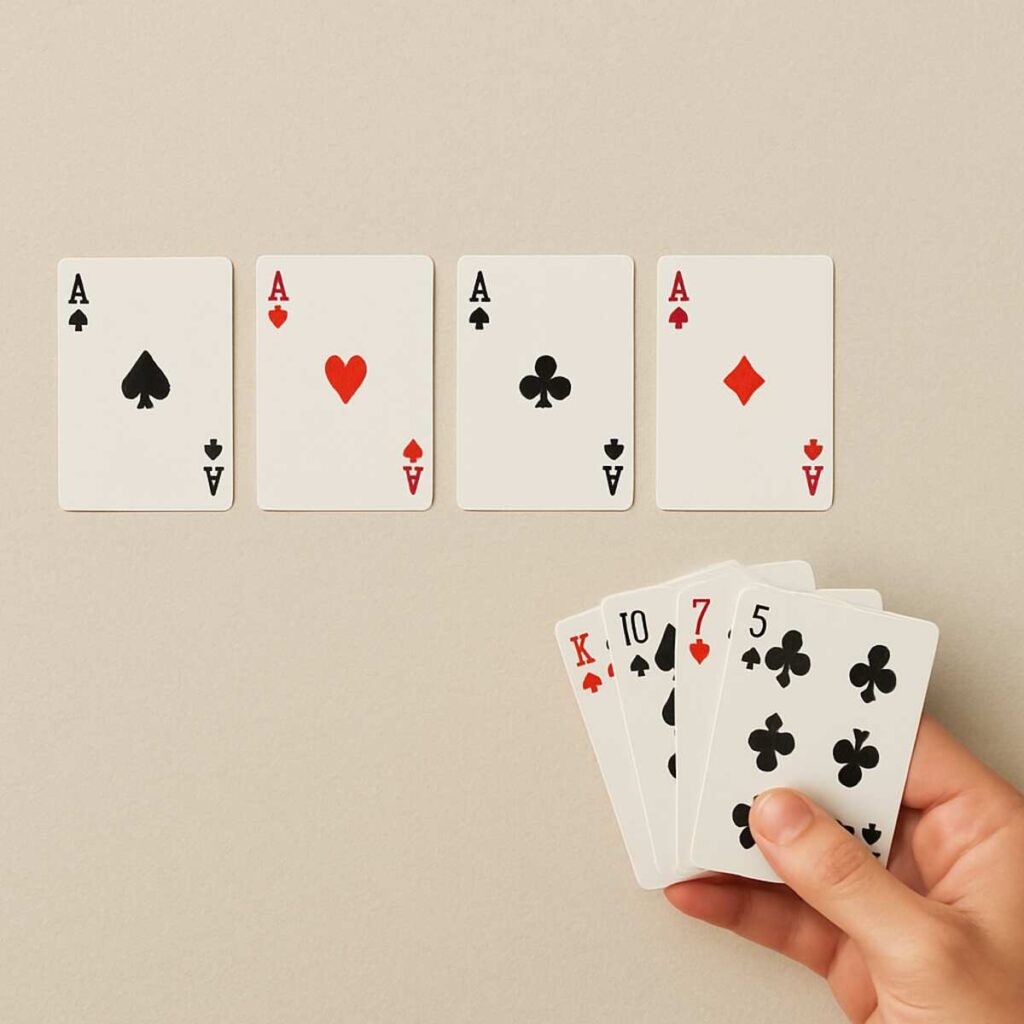
The dealing process in Churee follows a simple “four-by-four” pattern. First, the dealer deals a hand of four cards to each player, including themselves. You can look at your cards, but keep them secret from others.
Next, the dealer places the next four cards from the deck face-up in the center of the playing area. This forms the table, which is the shared pool of cards everyone will try to capture. The rest of the deck is set aside to be used later.
How to Make a Capture: Your Main Move in Churee
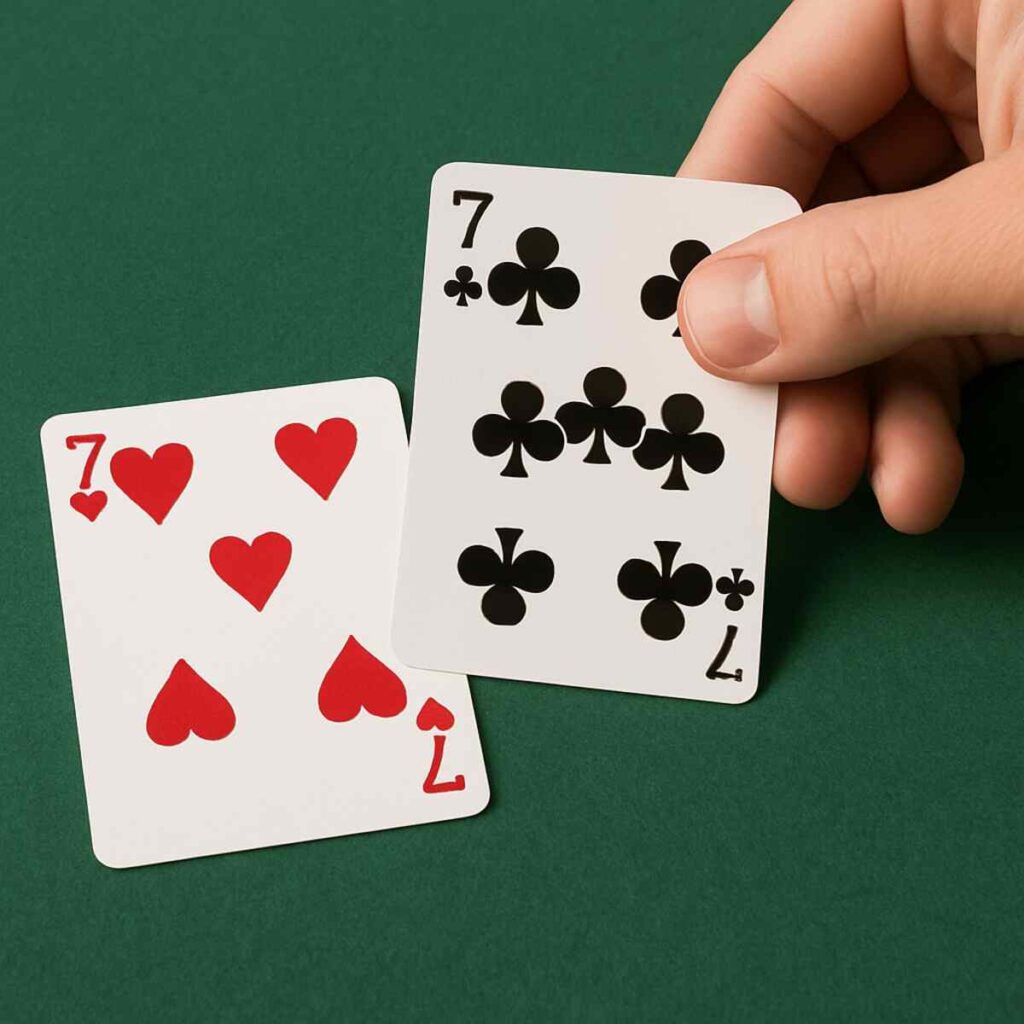
The main goal on your turn is to capture cards from the table using a card from your hand. To do so, you must match the rank of a card on the table; the suit does not matter for a basic capture.
For example, if there is a Jack of Hearts on the table and you have a Jack of Spades in your hand, you can play your card. You then take both the Jack you played and the Jack you captured and place them face down in your personal capture pile. The more cards in your pile, the better your chances of winning.
What to Do When You Can’t Make a Match
If you have no available matches, you cannot skip your turn. Instead, you must choose one card from your hand and place it face-up on the table with the other cards. This action is sometimes called trailing or discarding, and it ends your turn.
By adding a card to the table, you increase the number of targets for the next player. This makes your choice of which card to discard a strategic one. A good strategy is to discard a low-value card or a rank you don’t think others are likely to hold, giving away as little advantage as possible.
The Special Power of the Jack: Your Secret Weapon
The Jack is a card you rarely want to discard because it acts as a wild card for capturing. When you play a Jack, you perform a special move called a sweep: you capture all the number cards (2 through 10) currently on the table, regardless of their rank or suit.
However, a Jack cannot capture any face cards (Kings, Queens) or Aces. If the table holds a 4, a 9, and a King, playing a Jack would capture the 4 and the 9, but the King would remain. This unique ability makes the Jack one of the most valuable cards in your hand, allowing you to claim many cards in a single move.
How to Score a “Churee”: The Game-Winning Move
While a Jack sweep is powerful, the most rewarding move is the Churee (pronounced choo-ree). This special capture occurs when you use a card from your hand to take the very last card remaining on the table. For instance, if the only card left is an 8 of Diamonds and you play an 8 of Hearts to capture it, you have scored a Churee.
The prize for a Churee is an immediate 10 bonus points at the end of the round. A single, well-timed Churee can often be more valuable than several small captures, making it an exciting play that can swing a close game in your favor.
Ending the Round and Finding the Winner
A round of Churee concludes once the stock pile is depleted and every player has played their final card. Any cards left on the table are ignored. To find the winner, you tally the scores following this two-step calculation:
- Card Count Bonus: The player who captured the most cards earns a 5-point bonus.
- Churee Bonus: Add 10 points for each time you successfully performed a Churee during the round.
The player with the highest total score wins the round! This simple scoring is part of what makes Churee a great card game for groups.
Fun Variation #1: Playing with “Builds”
Adding ‘Builds’ introduces a new layer of planning and risk. This variation allows you to combine cards on the table to create a sum that matches a card in your hand.
Here’s how it works: Imagine you hold a 9, but there isn’t a 9 on the table. However, you see a 4 and a 5. On your turn, you can announce, “Building 9,” and place the 5 on top of the 4. This new pile, or build, stays on the table. You cannot capture a build on the same turn you create it; you must wait for your next turn to claim it with your 9.
This delay creates risk, as any other player with a 9 can steal your build before your turn comes back around. This mechanic encourages you to think a few steps ahead and pay closer attention to which cards have been played.
Fun Variation #2: The “Spades are Points” Rule
This popular variation introduces a new layer of scoring that makes certain cards more valuable. At the end of the round, you tally extra points based on any Spade cards you’ve captured. The values are:
- 2 of Spades = 2 points
- Ace of Spades = 1 point
- Each other Spade card = 1 point
Suddenly, the goal isn’t just to win the most cards—it’s to win the right cards. This change makes every turn more strategic, as capturing a lowly 3 of Spades could be more valuable than taking a high-ranking card of another suit.
Ready to Deal? Your Quick-Start Churee Checklist
You now have everything you need to deal your first hand. Here is a step-by-step reminder for the first round:
- Deal 4 cards to each player and 4 to the table.
- On your turn, match a card from your hand to one on the table to capture it.
- If you can’t match, play one card from your hand to the table.
- Score points for having the most cards and for clearing the table (a ‘Churee’!).
Churee is one of those perfect card games where the real win is connecting and having a good time. Grab a deck, shuffle up, and have fun!