


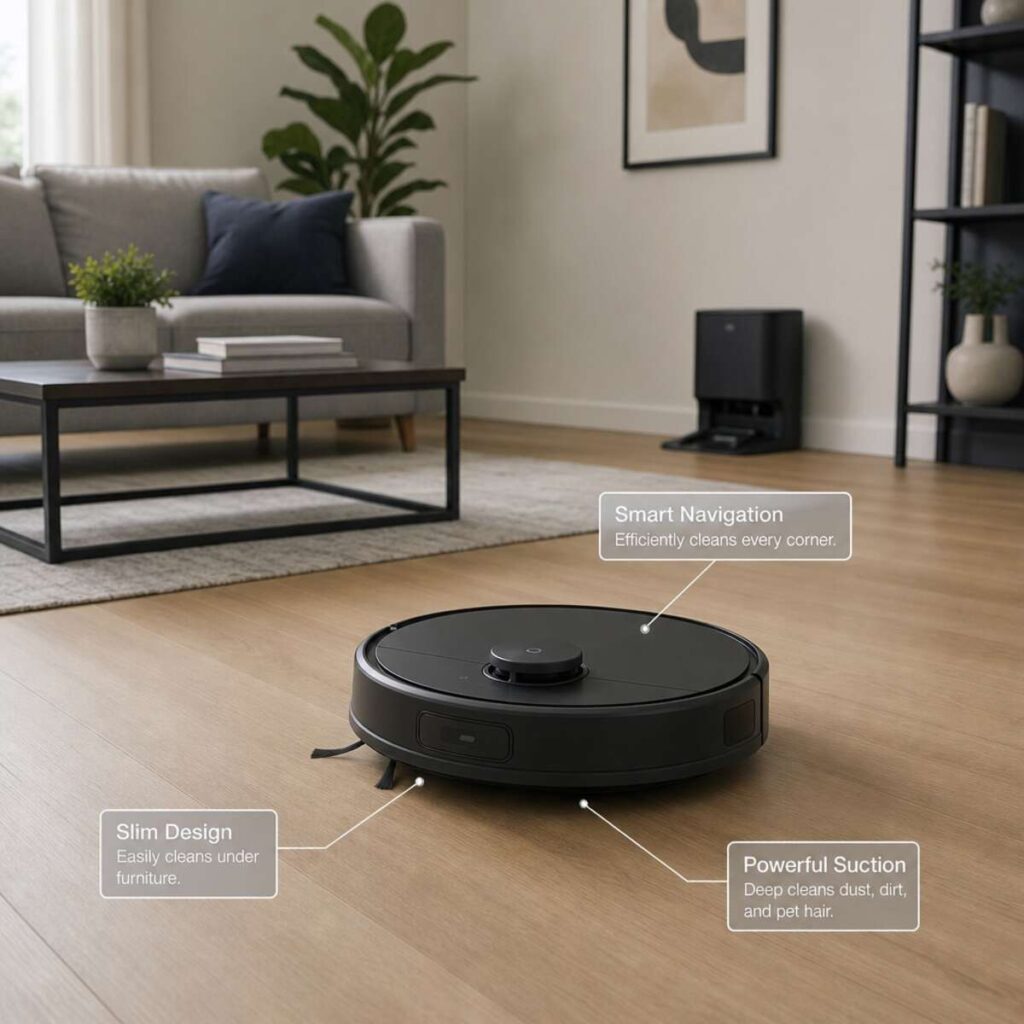
Imagine coming home after a long, exhausting day at work. Instead of being greeted by dust bunnies drifting across your hardwood floors or pet hair clinging desperately to your living room rug, you walk into a pristine environment. The floors are spotless, the carpets have those satisfying freshly vacuumed lines, and the air feels cleaner. Best of all? You did absolutely nothing to make it happen. The actual Interesting Info about Robot Süpürge.
This is the promise of the modern Robotic Vacuum Cleaner.
Over the past decade, home automation has transitioned from a sci-fi fantasy into a practical, everyday reality. Gone are the days when automated floor cleaners were simply novelty items that haphazardly bumped into walls and got stuck under the sofa. Today’s models are sophisticated, AI-driven machines capable of mapping your home, avoiding complex obstacles, and even emptying their own dustbins.
But with this incredible leap in technology comes a dizzying array of choices. Should you prioritize suction power or navigation? Do you need a hybrid device that also mops? And perhaps the most common question of all: are autonomous sweepers worth it for your specific lifestyle?
This comprehensive guide will walk you through everything you need to know to make an informed decision. Whether you are living in a cozy studio or a sprawling multi-level house, we will break down the features, technologies, and maintenance requirements to help you find the perfect robot vacuum for your home.
The Evolution of Floor Care: Why Make the Switch?
Before diving into the technical specifications, it is helpful to understand where these devices fit into your overall cleaning routine. For decades, the standard upright vacuum was the undisputed king of floor care. More recently, the cordless vacuum revolutionized the industry by cutting the cord and offering unprecedented mobility.
However, even the best cordless vacuum requires one critical component: your time and physical effort. A Robotic Vacuum Cleaner changes this dynamic entirely. Instead of dedicating your Saturday morning to pushing a heavy machine around your house, you delegate the task to an autonomous assistant.
Are Autonomous Sweepers Worth It?
The short answer is a resounding yes, but with a caveat: they are maintainers, not miracle workers. A robot vacuum is designed to keep your floors consistently clean on a daily basis. If you drop a bowl of cereal, you will likely still reach for your cordless vacuum for a quick spot clean. But for managing the daily accumulation of dust, dander, and dirt, an autonomous cleaner is an invaluable time-saver. The true value lies in the mental load it removes from your daily chore list.
Navigation and Mapping: The Brains of the Operation
The biggest differentiator between a frustrating robotic vacuum and a fantastic one is how it navigates your home. Early models used a “bump and redirect” method, moving in straight lines until they hit a wall, then randomly changing direction. Today, advanced mapping technologies allow these robots to clean methodically, moving in neat rows and remembering the exact layout of your rooms.
LIDAR Technology in Home Robots
If you want precise, rapid mapping, you need to look for a model equipped with LIDAR (Light Detection and Ranging). This is the same technology used in self-driving cars.
LIDAR technology in home robots involves an invisible spinning laser housed in a small turret on top of the vacuum. As the laser spins, it bounces off walls and furniture, creating a highly accurate, real-time 3D map of your home.
- Pros: It works perfectly in pitch-black darkness, maps homes incredibly fast, and is highly accurate.
- Cons: The turret on top adds height to the vacuum, which might prevent it from fitting under very low-clearance furniture.
Laser vs Camera Mapping Technology
While LIDAR is the gold standard for layout mapping, camera-based navigation (often called VSLAM – Visual Simultaneous Localization and Mapping) is its primary competitor.
When comparing laser vs camera mapping technology, it is important to understand how they “see.” Camera-based models use optical lenses pointed at the ceiling or straight ahead to map the room based on visual landmarks.
- Pros: These vacuums can often be built thinner since they don’t require a top turret. Cameras can also identify specific objects (like shoes or cables).
- Cons: Because they rely on sight, camera-based models struggle or completely fail to navigate in dark rooms. If you plan to run your vacuum at night, LIDAR is the superior choice.
Obstacle Avoidance in Modern Bots
Mapping tells the robot the general layout of the room, but what about the temporary obstacles? A dropped charging cable, a pair of socks, or a sudden “accident” left by a pet can spell disaster for older vacuums.
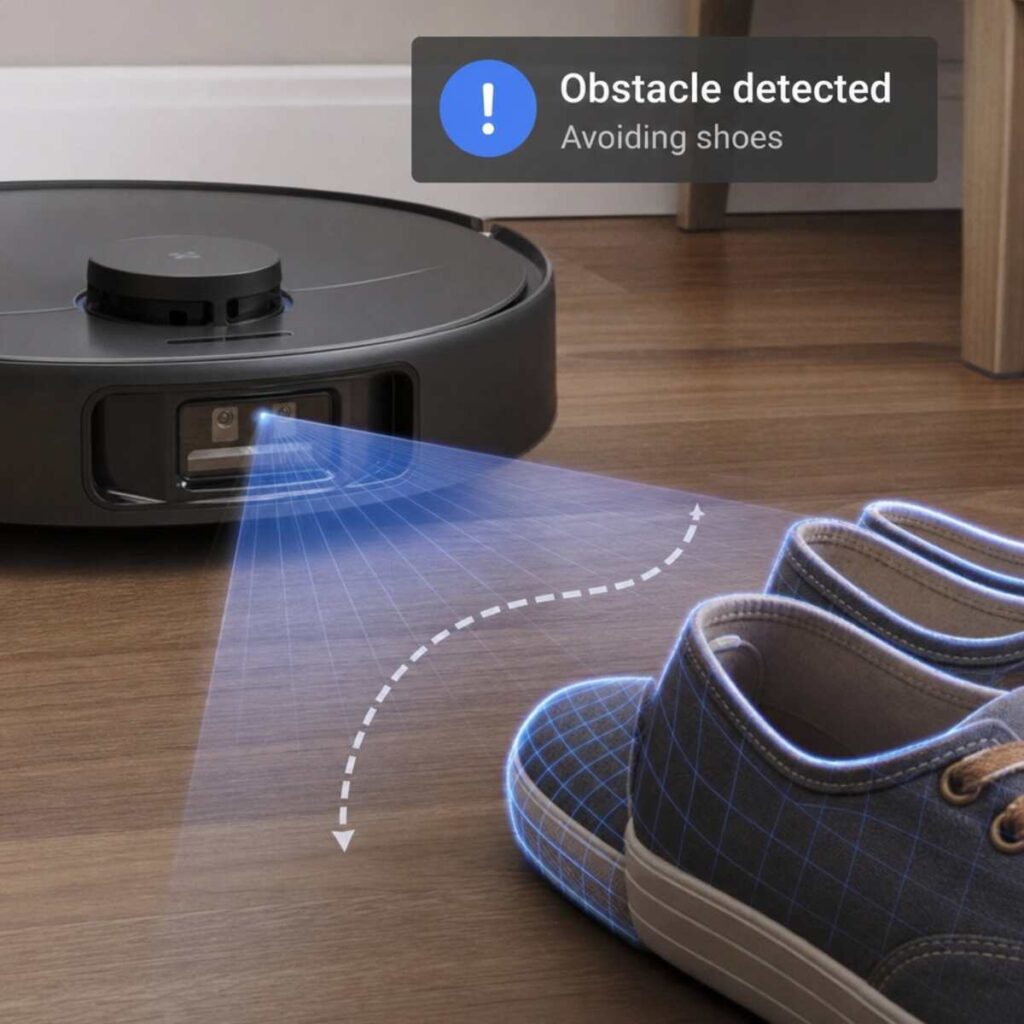
Obstacle avoidance in modern bots utilizes front-facing cameras, structured 3D light sensors, or artificial intelligence to identify and steer clear of hazards in real-time. If you have a cluttered home, children who leave toys on the floor, or unpredictable pets, investing in a robot with advanced obstacle avoidance is absolutely crucial to ensure you don’t come home to a tangled, error-beeping machine.
Cleaning Performance: Suction, Brushes, and Floors
Navigation ensures the robot reaches every corner of your room, but cleaning performance dictates what it does once it gets there. The effectiveness of a Robotic Vacuum Cleaner depends on a combination of suction power, brush design, and how it interacts with different surfaces.
Suction Power for Floor Types
Vacuum suction is typically measured in Pascals (Pa). Older or entry-level models might offer 1,500 to 2,000 Pa, while premium modern models boast massive suction numbers ranging from 5,000 to over 8,000 Pa. But how much do you actually need?
It depends entirely on your home:
- Hardwood, Tile, and Laminate: If your home consists mostly of bare floors, extreme suction is not strictly necessary. Even a 2,000 Pa vacuum can easily pick up dust, crumbs, and hair from hard surfaces. Instead, look for models with soft side brushes that won’t scatter debris.
- Low-Pile Carpets and Rugs: You will want a mid-range suction (3,000 to 5,000 Pa) to pull dirt from the fibers.
- High-Pile and Thick Carpets: This is where you need maximum power. Evaluating suction power for floor types becomes critical here; you need 5,000+ Pa and an aggressively agitated brush roll to lift heavy, embedded dirt from deep within thick carpet fibers.
Taming the Tangled Mess: Brushes and Hair
The main brush roll is the workhorse of the vacuum. Historically, these featured stiff bristles. While bristles are great at agitating carpets, they are a nightmare for long hair, wrapping it tightly around the roller until the machine stops working.
When looking at pet hair removal for sweepers, rubber brush rolls (or dual rubber extractors) are vastly superior. Rubber rollers prevent hair from embedding, instead guiding it to the ends of the roller or directly into the suction path.
Even with rubber rollers, you will occasionally need to perform some maintenance. Clearing brush roll hair tangles is easier on modern machines; most feature removable end-caps on the roller, allowing you to simply slide the accumulated rings of hair right off into the trash without needing to cut them with scissors.
HEPA Filtration for Allergy Sufferers
Vacuuming inevitably kicks up microscopic dust. If you or your family members suffer from allergies or asthma, the type of filter your robot uses is just as important as its suction power.
Look for models featuring HEPA filtration for allergy sufferers. True HEPA filters capture 99.97% of particles as small as 0.3 microns, including pollen, pet dander, and fine dust mites. This ensures that the air expelled by the vacuum is actually cleaner than the air it sucked in, significantly improving your home’s indoor air quality.
The Rise of the Hybrids: Vacuuming and Mopping
Why stop at vacuuming when a robot can mop, too? In recent years, the market has seen a massive influx of 2-in-1 combo machines. But are they effective?
Robot Mop vs Vacuum Hybrids
When comparing a dedicated robot mop vs vacuum hybrids, hybrids used to fall short, essentially just dragging a wet cloth behind them as they vacuumed. Today, the technology has advanced significantly.
Premium hybrids now offer active scrubbing. Some use sonic vibration technology (scrubbing the floor thousands of times per minute), while others use dual spinning mop pads that apply downward pressure to remove dried-on stains.
Furthermore, the best hybrids feature “auto-lifting” mop pads. When the robot detects it is moving from a hard floor onto a carpet, it automatically lifts the wet mop pad several millimeters into the air, preventing your rugs from getting damp while it continues to vacuum. If your home has a mix of hard floors and area rugs, this auto-lift feature is a game-changer.
The Ultimate Convenience: Self-Emptying and Self-Cleaning
If the goal of a robot vacuum is to reduce your workload, having to empty a tiny onboard dustbin every single day defeats the purpose. This brings us to one of the most significant innovations in the industry: the base station.
Self-Emptying Base Station Benefits
A self-emptying base is a larger docking station that houses a powerful vacuum motor and a disposable dust bag. When the robot finishes its cleaning run and docks to charge, the base station sucks all the dirt out of the robot’s onboard bin and stores it in the larger bag.
The self-emptying base station benefits are immense:
- True Autonomy: Depending on how dirty your floors are, a base station bag can hold 30 to 60 days’ worth of debris. You only have to think about vacuuming once every two months.
- No Dust Clouds: Emptying a robot’s small plastic bin directly into a trash can often results in a cloud of dust puffing back into your face. Base stations use sealed bags, completely trapping the allergens.
- Better Cleaning: A full dustbin drastically reduces a robot’s suction power. Because the base empties the robot after every run (or even mid-run), the vacuum always operates at peak performance.
Advanced Wash Stations for Mops
For the hybrid mop/vacuum models, base stations have evolved even further. The most premium models now feature tanks for clean and dirty water. When the robot docks, the station automatically washes the mop pads, extracts the dirty water, refills the robot’s onboard water tank, and even uses hot air to dry the mop pads to prevent mold and unpleasant odors.
Battery Life, Coverage, and Smart Features
A robot is only useful if it can finish the job. Understanding power management and smart integration will ensure your vacuum fits seamlessly into your lifestyle.
Battery Life of Autonomous Sweepers
When you review the specifications of a new device, let’s discuss the battery life of autonomous sweepers. Battery capacity is measured in milliampere-hours (mAh). Standard models usually have around 2,600 to 3,200 mAh, yielding about 90 to 100 minutes of cleaning time. Premium models feature massive 5,200 mAh batteries, allowing them to run for up to 180 minutes or more on a single charge.
However, battery life isn’t as critical as it used to be, thanks to “Smart Recharge and Resume.” If a modern robot runs low on battery in the middle of a job, it will automatically navigate back to its dock, recharge just enough to finish the task, and then resume cleaning exactly where it left off. Still, if you have a massive home (over 2,500 square feet), starting with a larger battery will ensure the job gets done faster without lengthy mid-cycle charging breaks.
Smart Home Control and Automation
The companion smartphone app is the control center for your automated cleaner. Once the robot has mapped your home, the app allows you to customize exactly how and when your home is cleaned.
App Features to Look For:
- Room Zoning: Label your rooms (Kitchen, Living Room, Hallway) so you can send the robot to clean specific areas on demand.
- No-Go Zones: Draw invisible walls or red zones on the map to prevent the robot from entering areas with fragile items, messy pet bowls, or complex cable clusters.
- Scheduling Automatic Cleaning Routines: This is where the magic happens. Scheduling automatic cleaning routines allows you to set the vacuum to run while you are at work, or have it clean the kitchen and dining room every night at 9:00 PM after dinner.
Voice Assistant Smart Home Integration
For the ultimate hands-free experience, look for voice assistant smart home integration. Most major brands are compatible with Amazon Alexa, Google Assistant, and Apple Siri.
This allows you to bypass the app entirely. Imagine you are cooking and spill some flour on the floor. Without washing your hands or touching your phone, you simply say, “Alexa, tell the robot to clean the kitchen.” The vacuum deploys, handles the mess, and returns to its dock. It is a level of convenience that, once experienced, is hard to live without.
Matching the Robot to Your Home
With all these features in mind, how do you choose? Here is a breakdown of what to prioritize based on your specific living situation.
Best Smart Vacuums for Apartments
If you live in a smaller space, you likely do not need an oversized, $1,000 premium machine. The best smart vacuums for apartments are typically slimmer models that can easily navigate tight furniture arrangements.
- Prioritize: Quiet operation (so it doesn’t disturb you in a small space) and strong navigation to handle cramped floor plans.
- Deprioritize: Massive battery life and massive base stations. A large self-emptying tower can be an eyesore and take up valuable real estate in a small apartment. A standard, low-profile charging dock is often sufficient.
Multi-Level Homes
If you live in a house with multiple stories, you will need a robot that supports “multi-floor mapping.” This allows the vacuum to store several different floor plans in its memory.
- Pro Tip: While robots have edge sensors to prevent them from falling down the stairs, they cannot climb them. You will either need to manually carry the robot upstairs when you want it cleaned, or consider purchasing a premium self-emptying model for the main floor and a budget-friendly standard model to leave permanently on the second floor.
Homes with Multiple Pets
Pets bring joy to a home, but they also bring hair, dander, and occasionally, accidents.
- Prioritize: Dual rubber brush rolls to prevent hair tangles, high suction power, and a self-emptying base station (pet hair fills up onboard bins incredibly fast). Most importantly, ensure the model has advanced obstacle avoidance. You want a robot equipped with AI cameras designed specifically to identify and avoid solid pet waste.
Maintenance: Keeping Your Robot Running Like New
While a Robotic Vacuum Cleaner drastically reduces your cleaning time, it is not entirely maintenance-free. To protect your investment and ensure it lasts for years, you must perform regular upkeep.
Weekly Maintenance Tasks
- Check the Brush Roll: Even with rubber rollers, long hair can occasionally sneak around the bearings. Take two minutes a week for clearing brush roll hair tangles.
- Inspect the Side Brushes: Pull off any trapped strings or hair that might restrict the spinning motion.
- Wipe Down the Exterior: Dust can accumulate on the robot itself, dulling its sleek appearance.
Monthly Maintenance Tasks
- Filter Care: Remove the HEPA filter and tap it against the inside of your trash can to dislodge fine dust. Do not wash HEPA filters with water unless the manual explicitly states they are washable, as water can ruin the microscopic paper fibers.
- Check the Wheels: Ensure the caster wheel (the small unpowered wheel at the front) spins and pivots freely. Pop it out and wipe away any grime.
How to Clean Sensor Lenses
Your robot relies on a complex array of sensors to “see” its environment, avoid falling down stairs, and safely dock. If these sensors get covered in dust, the robot may behave erratically, spin in circles, or refuse to run altogether.
Learning how to clean sensor lenses is incredibly simple but vital:
- Locate the Sensors: Flip the robot over. You will typically see 4 to 6 small, dark, rectangular windows along the front and side edges of the bottom perimeter. These are the cliff sensors. There is also usually a wall sensor on the side of the bumper, and charging contacts on the bottom or front.
- Use the Right Tools: Never use harsh chemical cleaners or rough paper towels, which can scratch the delicate plastic covers.
- Wipe Gently: Use a clean, dry microfiber cloth or a slightly damp melamine sponge to gently wipe each sensor window.
- Clean the Dock: Don’t forget to wipe the IR window and the metal charging contacts on the base station as well. This ensures the robot can find its way home and charge efficiently.
Troubleshooting Common Issues
Even the smartest devices occasionally encounter hiccups. Here are a few common issues and how to resolve them quickly.
- The Robot Keeps Getting Lost: If your robot cannot find its base station, ensure the dock is placed against a flat wall with at least 1.5 feet of clearance on either side and 4 feet of clearance in front. If it is hidden under a low couch or behind a door, the robot’s infrared homing beacon will be blocked.
- Map Corruption: Sometimes, moving a piece of heavy furniture or picking the robot up mid-cycle can confuse its internal map. If the robot starts acting erratically or cleaning rooms diagonally, go into your app and restore a previously saved map, or delete the map and let it do a fresh mapping run.
- Loss of Suction: If you notice crumbs being left behind, check the dustbin (if you don’t have a self-emptying base). If the bin is empty, the issue is almost certainly a clogged filter. Replacing a heavily soiled HEPA filter will instantly restore the machine’s suction power.
Budgeting: How Much Should You Spend?
The market for automated cleaners is vast, with prices ranging from $150 to over $1,500. Understanding what you get at each price tier will help you avoid overspending or ending up with a device that doesn’t meet your needs.
Entry-Level ($150 – $300)
These models are great for small spaces or as secondary vacuums. They usually rely on standard gyroscope navigation (meaning they clean in logical rows but don’t build interactive maps with no-go zones). They will require you to empty the bin manually and will not have advanced obstacle avoidance.
Mid-Range ($300 – $600)
This is the sweet spot for most consumers. In this tier, you will find highly capable robots featuring LIDAR mapping, interactive apps, robust suction power, and basic self-emptying base stations. They handle daily maintenance flawlessly but might lack high-end mopping features or AI camera obstacle avoidance.
Premium ($600 – $1,500+)
Welcome to the cutting edge of smart home technology. These devices are fully autonomous floor care centers. They feature extreme suction power, hybrid mopping with auto-lifting pads, AI-driven obstacle recognition, and massive, multi-functional base stations that wash and dry the mops while emptying the dustbin. If you have a large home, multiple pets, and the budget to spare, these machines offer an unparalleled, hands-off cleaning experience.
Conclusion: Reclaiming Your Time
Deciding to invest in a Robotic Vacuum Cleaner is about much more than just buying a new home appliance; it is an investment in your personal time and peace of mind. The feeling of waking up or coming home to freshly cleaned floors, without having lifted a finger, is truly transformative.
When choosing your ideal automated assistant, remember to focus on your specific living situation. If you have a small space, look for the best smart vacuums for apartments. If you have a busy household with pets, prioritize strong obstacle avoidance, rubber brush rolls, and the massive convenience of a self-emptying base station.
Pay close attention to navigation types, opting for LIDAR if you value precision and dark-room cleaning. Take the time to set up your app properly, utilizing no-go zones and voice assistant smart home integration to make the experience completely frictionless. And finally, commit to the minor monthly maintenance required—like wiping sensors and replacing filters—to ensure your robot remains a faithful companion for years to come.
The days of sacrificing your weekends to manual floor scrubbing are over. Embrace the future of home automation, schedule your cleaning routines, and let your robot handle the dirty work while you focus on the things that truly matter to you.