


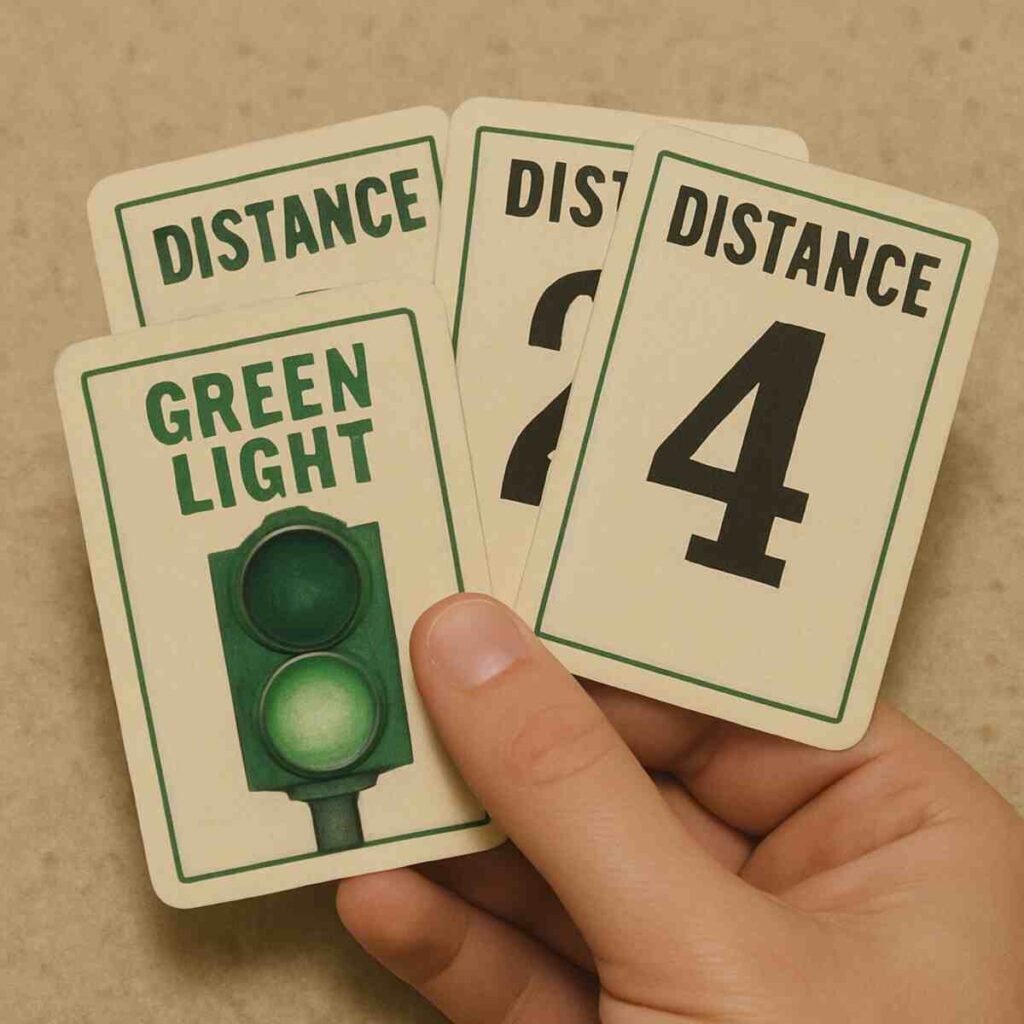
Remember the thrill of dashing across the yard during a game of Red Light, Green Light, trying to freeze in time before you got caught? That classic childhood race is back, and this time, all the tension and excitement fit in the palm of your hand. The Red Light, Green Light card game brilliantly captures the sudden stops and daring sprints of the original in a format you can play anywhere. The Amazing fact about Login lion8.
If you’re searching for a fun party game for adults that won’t require an hour of explaining, this is your answer. The game is perfectly designed for fast rounds, lots of laughs, and minimal setup. Its simplicity makes it a fantastic icebreaker for new groups or a reliable go-to for family game night.
While the game is themed after the mega-hit Netflix series Squid Game, you can rest assured it’s all fun and no fear. It’s a completely family-friendly experience where the only thing you risk losing is the round itself. This guide provides all the instructions needed to start your first round in minutes, walking through setup, card functions, and the single goal required to claim victory. Ready to play?
What’s the Goal? The 3 Things You Need to Know Before You Play
Just like the playground game, the objective is to be the first player to cross the finish line. In the card game, you achieve this by playing a complete set of Distance cards. The goal is to be the first person to lay down your Distance cards in order, from 1 all the way to 8. It’s a simple race to the finish, one card at a time.
The game is designed for 2 to 6 players, making it a great option for a quick match or a lively family game night. A typical round is over in about 15 minutes. Inside the box, you’ll find everything you need to start playing immediately:
- 112 total cards (including Distance, Red Light, and Green Light cards)
- 1 Rule Sheet
With a single, straightforward goal, this game is all about fast fun and sudden stops.
How to Set Up Your First Game in Under 60 Seconds
One of the best parts of this game is how quickly you can start. True to its “fast fun” promise, getting the table ready takes less than a minute.
Just follow these three simple steps:
- Shuffle: Take the entire deck of 112 cards and give it a good shuffle.
- Deal: Give each player seven cards, dealt face-down. This is their starting hand, which they should keep secret from other players.
- Create Piles: Place the rest of the deck face-down in the center of the table. This is your Draw Pile. Finally, flip the top card of the Draw Pile face-up right next to it. This single card starts your Discard Pile.
And that’s it! With the cards dealt, you’re ready to learn what to do on your turn.
The Core of the Game: How a Single Turn Works
Every player’s turn follows the exact same two-step pattern: draw one, play one. First, you’ll draw one card from the top of the Draw Pile and add it to your hand. Second, you’ll choose one card from your hand to play. This simple cycle keeps the game moving at a brisk, exciting pace.
To “play” a card means you take an action. You’ll either place a card in front of you to build your path to the finish line, or you’ll place it on the Discard Pile to trigger an effect, like stopping another player in their tracks.
If you find you have no cards you can legally play, you must still complete your turn. Simply choose one card from your hand—likely one you don’t need—and place it face-up on the Discard Pile to end your turn.
How to Move Forward: Using “Green Light” and “Distance” Cards
To win the game, you need to be the first player to lay down a complete, ordered sequence of “Distance” cards, numbered 1 through 8. Think of this growing pile of cards as your “run.” The first person to complete their run by playing their “8” card instantly wins!
However, you can’t just play a Distance card whenever you want. You need a “Green Light” card to make a move. On your turn, you play a “Green Light” card to the discard pile, which acts as the signal to go. This allows you to immediately play the next Distance card in your sequence. The only exception: you can always play your “1” Distance card to start your run without needing a Green Light first.
For example, imagine you have your “1” card on the table. On a later turn, you play a “Green Light,” and as its effect, immediately place your “2” card on top of your “1.” Your next goal is to find another “Green Light” to play your “3.”
How to Stop Your Opponents: The Power of the “Red Light” Card
While “Green Light” cards move you forward, the “Red Light” card stops someone else dead in their tracks. Playing this card on an opponent during your turn brings their race to an immediate halt. They become “Frozen.”
Being “Frozen” completely stops a player’s progress. A frozen player cannot play any “Distance” cards or use special cards on others. Their only goal is getting unfrozen.
To break free, a frozen player must simply play a “Green Light” card on their turn. Instead of letting them play a Distance card, this Green Light is used up just to remove the “Frozen” status. They can then resume playing normally on their next turn.
Knowing when to use your Red Light is key. The best time to play it is on a player who is getting dangerously close to playing their final “8” card. Stopping the leader at the last second can completely change the outcome of the game.
Mastering the Chaos: What Every Other Special Card Does
The Red Light card is just the beginning. Several other cards can turn the race on its head in an instant.
A “U-Turn” card immediately reverses the direction of play. If turns were moving clockwise, they now go counter-clockwise until another U-Turn is played, which is a great way to skip a player nearing the finish line.
The “Speeding” card acts as a penalty for the next player in line. They not only lose their turn but must also draw two cards from the pile. This slows them down by denying them a play and clogging their hand.
Perhaps the most dramatic card is the “Last Car.” Playing this allows you to choose any player and swap your entire hand of cards with theirs. This is the ultimate comeback move if you’re stuck with a terrible hand while an opponent is close to winning.
How to Claim Victory: The Official Winning Conditions
Victory is refreshingly simple: be the first person to play a complete set of Distance cards in numerical order, from 1 to 8. The straightforward winning conditions mean there’s never any doubt about who is in the lead.
The moment a player places their final “8” Distance card, the game is immediately over. That player has instantly won! Even if an opponent was holding a Red Light card, it’s too late once your winning card is on the table.
If the draw pile runs out, the game doesn’t stop. Simply take the discard pile, give it a good shuffle, and place it face-down to become the new draw pile. The action continues until someone claims the win.
A Simple Strategy to Win Your First Game
An effective strategy begins with paying attention. By keeping a mental note of how many Distance cards each opponent has played, you can easily identify the leader. This simple observation is the foundation for every smart move.
Once you know who’s ahead, you’ll know when to use your most powerful cards. It’s tempting to play a “Red Light” as soon as you draw it, but patience is key. Holding that card until an opponent is one or two steps from winning can change the game. This targeted sabotage is what makes Red Light, Green Light such a fun party game for adults.
Beyond stopping others, you must also manage your own hand. If your hand is clogged with cards you can’t currently play, it’s often wise to discard one to make room. This gives you a better chance of drawing the exact Distance or “Green Light” card you need for your own race.
Red Light, Green Light vs. UNO: Which Is Right for Your Game Night?
Both UNO and Red Light, Green Light are fantastic card games, but they offer different flavors of fun. In UNO, the goal is to get rid of every card. Red Light, Green Light, however, is a race to be the first to build a specific sequence of cards.
This core difference changes player interaction. Red Light, Green Light feels much more direct; you choose exactly who to hit with a “Red Light” card. In contrast, UNO’s “Skip” or “Draw 2” cards usually just affect whoever happens to be next.
Here’s a quick breakdown:
- The Goal: A clear race to the finish line (RLGL) vs. emptying your hand of cards (UNO).
- The Vibe: Direct, playful sabotage (RLGL) vs. classic, turn-based matching (UNO).
- The Theme: A mini-story in every game (RLGL) vs. an abstract game of colors and numbers (UNO).
If you’re looking for a game that’s fast, thematic, and encourages some hilarious, lighthearted rivalry, Red Light, Green Light is an excellent choice.
Fun Tweaks: How to Adapt the Game for Any Group Size
One of the best things about Red Light, Green Light is its flexibility. With a few adjustments, you can create variations for different group sizes.
For a fast, two-player duel, try this tweak: when you successfully play a “Red Light” on your opponent, you immediately get to draw a new card. This reward for aggressive play keeps hands full and speeds up the game.
For a larger party, try playing in teams. Sit across from a partner and play as a unit. The twist is that you can play a “Green Light” card to help your teammate if they get stuck. The first team with a player who crosses the finish line wins.
When playing with younger kids, try “open-hand” play where everyone lays their cards face-up. This turns the game into a collaborative puzzle and is a fantastic way to teach the rules without pressure.
Where to Buy the Official Game (And What to Look For)
Finding the official game is simple, as it’s available at most major retailers both in-store and online. Look for it at places like:
- Amazon
- Walmart
- Target
- Your local independent game store
When shopping online, search for “Red Light, Green Light card game” or “Squid Game card game.” To ensure you’re getting the authentic experience, look for two key details on the box: the publisher’s name, Mixlore, and the official Netflix logo.
Now You’re Ready to Play
You now have everything you need to shuffle, deal, and race to the finish line. This game is perfect for your next family game night or as a fun party game for adults, capturing the classic tension of the original in a fast format you can play again and again.
So grab your friends and family, and clear the table. The next time you hear “Red Light, Green Light,” it won’t just be a childhood memory—it will be a challenge. Ready, set, go!