


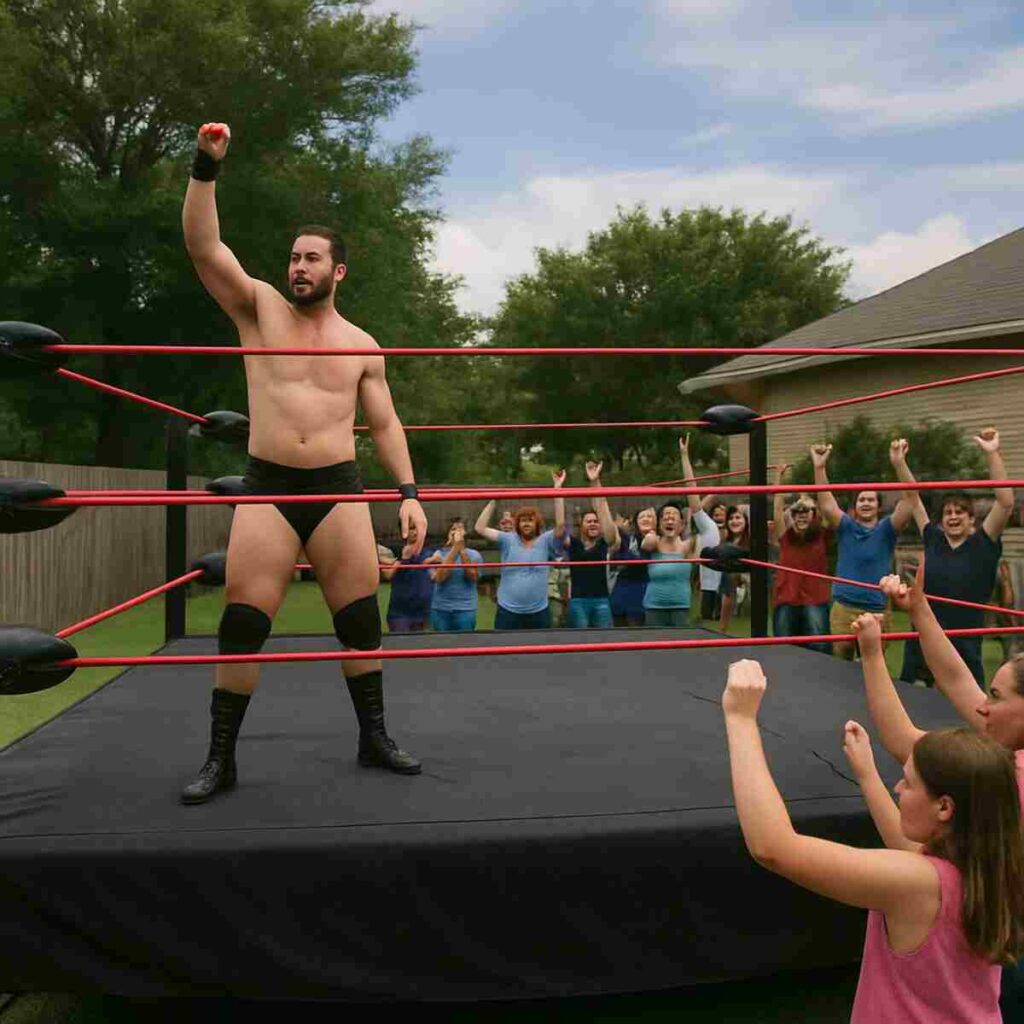
If you have ever checked your watch during a generic DJ set or stood awkwardly around a buffet table waiting for an event to end, you are not alone. Modern event planners and private hosts are increasingly moving away from passive background music in search of “spectacle” entertainment—experiences that force guests off their phones and into the moment. While traditional options like live bands or comedians remain popular, a growing number of hosts are discovering the high-octane solution of bringing a full-scale micro wrestling show directly to their venue. Choose the best micro wrestling show for parties.
Far from being a simple novelty act, professional micro wrestling is a legitimate athletic production scaled down for intimacy and impact. The performers are skilled athletes who execute the same high-flying maneuvers, dramatic storytelling, and technical grappling seen on major television broadcasts, but they do so within a ring size that fits comfortably in a backyard or hotel ballroom. When hiring high energy athletic entertainment acts, the distinction matters: you are not paying for a chaotic free-for-all, but rather a choreographed performance designed to elicit cheers, gasps, and laughter from a diverse crowd.
Most hosts assume that organizing a wrestling event requires a stadium-sized budget and a logistical miracle, but the modern mobile wrestling circuit is designed specifically for accessibility. Professional touring companies utilize a portable 12-foot to 16-foot ring that functions as a mobile stage, capable of being set up on grass, pavement, or indoor flooring. This infrastructure allows the drama of the “squared circle” to be transported anywhere, effectively turning a standard patio or conference hall into a buzzing arena in under an hour.
This approach is known in the industry as “turnkey production,” meaning the entertainment company provides every element required for the show. A reputable micro wrestling show for parties arrives with not just the ring and the athletes, but also the sound system, entrance music, lighting, and a referee to manage the action. For the host, this alleviates the stress of coordinating multiple vendors; once the team arrives, they handle the load-in, the performance, and the breakdown, leaving the organizer free to enjoy the event alongside their guests.
In practice, the impact of this entertainment style on crowd dynamics is immediate and measurable. Consider a recent 40th birthday celebration where the host replaced the usual dance floor with a wrestling ring: attendance retention spiked, with guests staying hours past the cake cutting simply to see the main event match. As unique birthday party entertainment for adults, it bridges social gaps, giving coworkers, friends, and family members a shared, electrifying experience to bond over instantly.
Ultimately, the value of a live wrestling event lies in its ability to generate organic excitement and social media buzz. While a playlist might get heads nodding, a body slam in the backyard gets cameras recording and guests posting. By anchoring your event with a professional, turnkey wrestling production, you transform a standard gathering into a memorable story that your guests will be recounting for months.
Why Your Next Event Needs a ‘Spectacle’ Strategy
Hosting a memorable gathering requires more than just filling a room with music and appetizers. While a playlist sets a mood, it often functions as background noise—passive entertainment that allows guests to drift into their smartphones or stick to the cliques they arrived with. A “spectacle” strategy flips this dynamic by introducing a focal point so commanding that it demands collective attention. When you book a high-energy production, you aren’t just filling time; you are creating a shared reality that instantly breaks the ice and forces everyone into the present moment.
Interactive combat sports for corporate events or private gatherings operate as a powerful “social glue.” Unlike a stand-up comedian where the audience sits quietly, athletic theater encourages shouting, cheering, and reacting in unison. This communal release of energy transforms a stiff crowd into a cohesive unit, bonding over the sudden twists and acrobatic feats occurring right in front of them. Whether you are seeking unique birthday party entertainment for adults or a way to wake up a sales conference, the goal is to shift guests from passive observers to active participants in the narrative.
Success is easily measured by guest engagement metrics, specifically the volume of the crowd and the “social proof” generated during the event. When phones come out, they shouldn’t be for scrolling social media, but for capturing the action in the ring to share immediately. This level of immersion is the hallmark of modern micro wrestling, but achieving it requires understanding exactly how the performance is structured to maintain that momentum.
The Anatomy of a Micro Wrestling Show: From Bell to Bell
Just as a wedding reception has peaks and valleys—dinner, toasts, dancing—a professional micro wrestling production is carefully paced to maximize energy without exhausting the crowd. It isn’t 90 minutes of non-stop combat; instead, think of it as athletic theater that blends high-flying stunts with comedic storytelling. This variety ensures that every guest, regardless of whether they follow sports, stays engaged with the narrative unfolding in the ring.
Most standard packages run roughly 90 minutes, utilizing a “three-act” structure designed to build momentum:
- The Opener (Act I): High-energy entrance music and a fast-paced athletic match designed to grab immediate attention and set the tone.
- The Comedy Mid-Card (Act II): A lighter, humorous segment where athletes often interact directly with specific guests or the guest of honor, breaking the “fourth wall.”
- The Main Event (Act III): The most technical and dramatic match, featuring the highest stakes, the biggest stunts, and a definitive grand finale.
Between these bells, the barrier between performer and observer frequently dissolves. Unlike a movie where the screen is static, dwarf wrestling show duration and format allows for improvisation based on the crowd’s specific energy. Athletes might high-five the front row, invite a CEO into the ring for a photo op, or playfully “argue” with a heckler, making the audience an integral part of the show rather than just spectators.
This flow dictates your planning for food and drink service, as you won’t want waitstaff blocking the view during the main event’s climax. However, before you can finalize the run-of-show, you must ensure your venue can physically accommodate the production. Mobile wrestling show logistics and setup rely entirely on having the correct ground space for the ring itself.
Measuring the ‘Ring Footprint’: Essential Space Requirements
While a standard television ring spans 20 feet, micro wrestling productions typically utilize a specialized 12-foot by 12-foot structure. This compact footprint allows the spectacle to fit into hotel ballrooms, large backyards, or even wide driveways, but you must account for more than just the metal frame. The total space requirements for portable wrestling ring setups must include a “splash zone”—a safety buffer that prevents a front-row guest from becoming an accidental part of the action.
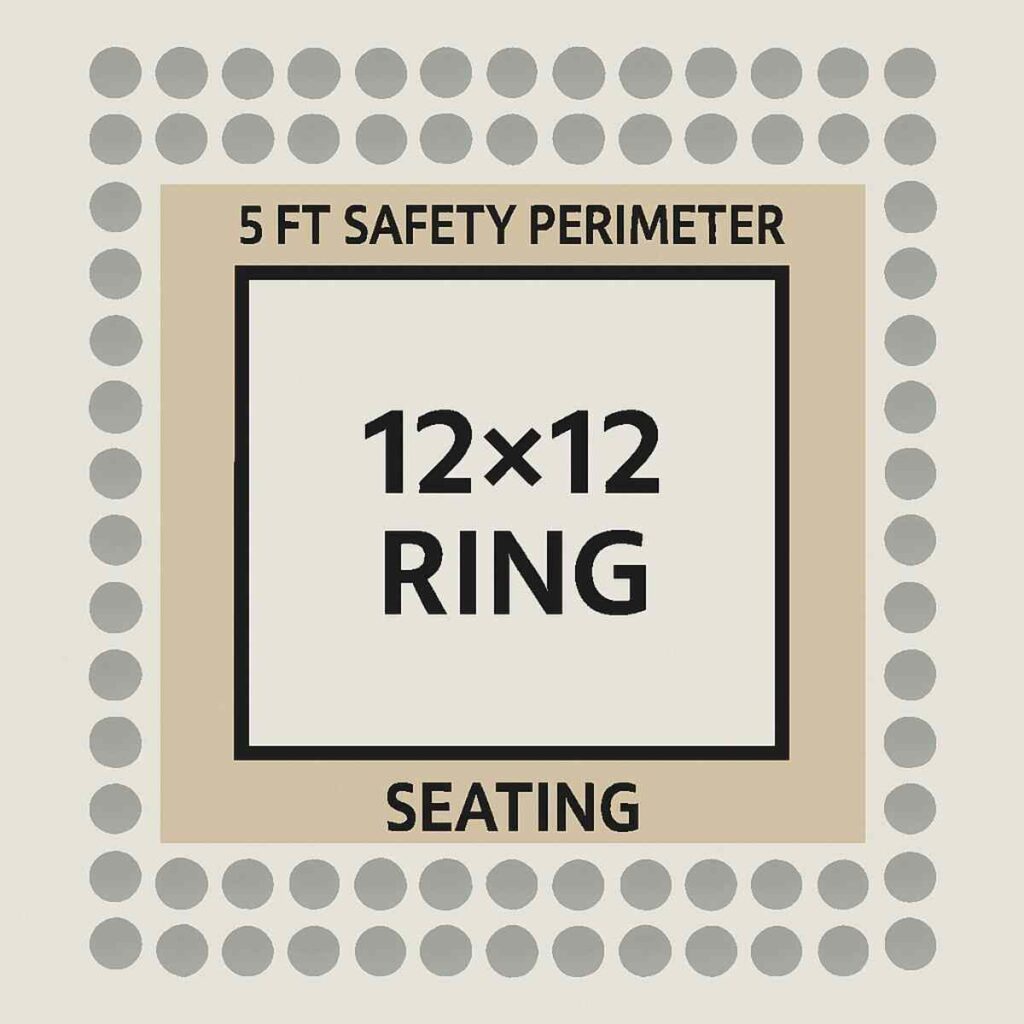
To host a safe and seamless event, evaluate your venue against these non-negotiable metrics:
- Vertical Clearance: A minimum of 10–12 feet of ceiling height is required to accommodate high-flying maneuvers off the top turnbuckle.
- The Safety Perimeter: Allow for at least 3 to 5 feet of open space on all four sides of the ring for athletes to exit and enter safely.
- Level Ground: The surface must be perfectly flat; concrete, asphalt, or short, dry grass are ideal, while loose gravel or steep inclines are safety hazards.
Beyond dimensions, the structural integrity of the ground matters. Because mobile wrestling show logistics and setup involve heavy steel beams and wood planks, the surface must be load-bearing and rigid. Placing the ring on a fragile antique deck or a muddy lawn can compromise the stability of the ropes, affecting the athletes’ ability to perform complex stunts. Ensuring a solid foundation is the first step in guaranteeing the safety of the performers, a priority that clearly distinguishes legitimate athletic troupes from amateur acts.
The Professionalism Factor: Athletes vs. Novelty
Securing entertainment often comes with anxiety about quality, especially when navigating niche markets where the line between spectacle and gimmick can blur. The difference between a memorable show and an uncomfortable experience lies entirely in the pedigree of the performers. Legitimate micro wrestling organizations employ trained athletes who have spent years mastering the same grappling mechanics and in-ring psychology used in major television leagues. These are not untrained actors in costumes; they are professionals who treat the ring with the discipline of gymnasts, ensuring the spectacle remains respectful and high-energy rather than devolving into a crude novelty act.
Physics inside the squared circle does not discriminate based on height. When comparing micro wrestling vs standard professional wrestling, the fundamental difference is merely vertical reach; the impacts, slams, and aerial maneuvers carry the same physical risks and require identical conditioning. Reputable companies mandate rigorous circuit training to ensure safety during complex sequences, much like a stunt team preparing for a film. This dedication allows them to perform high-flying maneuvers that generate genuine applause, elevating the atmosphere of your event from a simple party to a production-quality athletic showcase.
A troupe’s professionalism is most visible in how they handle the crowd off the canvas. True entertainers understand they are brand ambassadors for your event, often facilitating structured dwarf athlete meet and greet sessions where guests can engage directly with the performers. This approachability is a hallmark of the professional circuit, adding value beyond the matches themselves. Verified companies providing seasoned athletes rather than amateurs justify the financial investment required to secure them.
Decoding the Bill: What Does It Actually Cost to Hire Pro Wrestlers?
Unlike hiring a local DJ where hourly rates are somewhat standardized, bringing a mobile combat sports production to your venue involves complex variables that shift the financial landscape. For a legitimate, turnkey show, you are typically looking at a baseline investment starting in the low-to-mid thousands rather than hundreds. This base fee generally covers the core spectacle—the athletes, the referee, and the emcee who drives the crowd energy—but it is vital to realize that “budget” options often sacrifice production quality or performer safety.
The actual performance is only one line item on the invoice; the heavy infrastructure required to support the show often dictates the final price. Because these troupes usually tour nationally, logistics play a massive role. You are not just paying for talent; you are funding the transport of an 18-foot steel ring, sound systems, and lighting rigs to your specific location. Consequently, determining exactly how much does it cost to hire micro wrestlers often fluctuates based on your proximity to the troupe’s current tour route, with mileage and gas surcharges frequently added to the base fee.
Beyond the technical logistics, professional entertainment comes with hospitality requirements outlined in a contract addendum known as a “rider.” Since these performers are athletes engaging in high-impact physical activity, they require specific conditions to recover and perform safely. This typically translates to hotel rooms for the crew and a per diem or catered meal on the day of the event. The best midget wrestling booking agencies will be transparent about these needs upfront, ensuring you aren’t surprised by a last-minute requirement for multiple hotel rooms and hot meals.
To simplify these moving parts, many event planners prefer negotiating an “all-inclusive” flat rate that bundles the performance, travel, lodging, and ring rental into a single check. This approach eliminates the headache of collecting receipts or booking separate hotels, allowing you to focus on the guest experience rather than the accounting. However, even with the budget settled and the ring booked, there is one final, non-negotiable layer of paperwork that protects your wallet more than any negotiation strategy: the event insurance policy.
Safety First: Insurance and Liability for Combat Sports
Hosting a live athletic production carries significantly different risks than a standard dinner party or DJ set. Since the entertainment involves high-impact stunts, reputable touring companies carry multimillion-dollar general liability policies to protect both their athletes and your property. This coverage is verified through a Certificate of Insurance (COI), a standard document proving the troupe is financially responsible for accidents. Without valid insurance for hosting private wrestling events, your standard homeowner’s or business policy might leave you heavily exposed if a piece of equipment fails or a guest is injured near the ring.
Securing the venue requires more than just a handshake; you must request to be added as an “Additional Insured” on the troupe’s policy for your specific event date. This legal step extends their coverage to you, ensuring their insurance acts as the primary defense if a claim arises from the performance. Furthermore, professional backyard wrestling event safety guidelines dictate a clear separation between the action and the audience. While the wrestlers accept the physical risks of the sport through their own employment contracts, you must verify that the company uses barricades or strict spacing to keep your attendees safe from the “splash zone.”
Before signing any contract, ask the booking agent these critical questions to verify their legitimacy:
- Can you provide a current COI listing me as “additionally insured” for the event date?
- What is the aggregate limit of your liability coverage (usually $1M – $2M)?
- Do you provide your own crowd control barriers to separate guests from the ring?
With the legal safeguards locked in, your attention must shift from paperwork to physical infrastructure. Even the most comprehensive insurance policy cannot power the lights or feed the crew, leading directly to the logistical necessities found in the technical rider.
The ‘Rider’ Reality: Power, Water, and Catering Needs
Turning a backyard or ballroom into a functioning arena requires feeding the beast—specifically the electrical one. While a high-quality mobile wrestling show’s logistics and setup package usually includes professional sound systems and lighting rigs, that gear draws significantly more amperage than a standard household appliance. You will likely need to provide access to two separate 20-amp dedicated circuits to prevent a mid-show blackout, or arrange for a quiet generator if the ring is positioned far from the main building’s power source.
Beyond the hardware, the human element of private events, such as dwarf wrestling entertainment, demands specific hospitality considerations often detailed in the contract rider. These performers are elite athletes engaging in high-intensity cardio, meaning a simple bathroom stall is insufficient for changing gear and physical recovery. A professional host must provide a private, climate-controlled “green room”—such as a spare office, conference room, or guest house—stocked with ample water and light catering to ensure the cast is fueled and focused for the performance.
Successful execution also depends heavily on coordinating the physical movement of the production gear before the first guest arrives. A professional ring is heavy and cumbersome, requiring a clear, wide path for load-in at least ninety minutes prior to bell time. By confirming these logistical capabilities upfront, you establish a professional baseline that makes it significantly easier to distinguish legitimate production companies from fly-by-night operators during the selection process.
Vetting the Agencies: Red Flags and Green Flags
The entertainment industry is notorious for varying standards of quality, and the niche world of micro athletics is no exception. Finding the best midget wrestling booking agencies requires looking past the flashy website banners and digging into their operational history. A legitimate company will have a consistent touring schedule and verified reviews from past corporate or private clients, whereas a fly-by-night operator often lacks a digital footprint beyond a generic social media page.
Visual evidence is your most reliable filter when comparing different micro wrestling tour companies. Professional troupes invest in high-definition promo reels that showcase a branded ring, matching athletic gear, and engaged crowds. If a vendor can only provide shaky cell phone footage recorded in a dim bar, consider that a preview of the production value they will bring to your event.
| Feature | Professional Agency Traits | Unreliable Operation Traits | | :— | :— | :— | | Liability | Carries $1M+ General Liability Insurance & COI | “Don’t worry about it” attitude; no proof of coverage | | Equipment | Branded, well-maintained ring with safety mats | Generic, worn-out equipment; missing turnbuckle pads | | Communication | Dedicated booking agent & detailed contract | Cash-only requests; communication via personal text only |
Finalizing your choice ultimately comes down to paperwork and protection. Reputable groups will always execute a formal contract that clearly outlines cancellation policies and liability limits, ensuring you aren’t left responsible for an athlete’s injury or a no-show performer. With a trusted partner secured and the contract signed, your planning must shift to the physical environment, specifically addressing the distinct challenges of hosting an event under the open sky versus within the confines of a banquet hall.
Outdoor vs. Indoor: Weather Contingencies and Lighting
Mother Nature is the uninvited guest you must always plan for when hosting an athletic production outside. While a sunny afternoon seems ideal for a spectacle, even a drizzle can render the wrestling canvas dangerous. The mat is a specialized surface that becomes incredibly slick when wet, creating a severe injury risk for the performers. To adhere to standard backyard wrestling event safety guidelines, professional agencies often mandate a covered area, such as a pavilion or a rented high-peak tent, to shield the equipment. If a physical cover isn’t feasible, you must have an immediate “Plan B” to move the production indoors at the first sign of rain, ensuring the show continues without compromising the integrity of the ring.
Visibility is equally critical once the sun sets, as the theatrical nature of the performance requires more than just ambient patio string lights. The audience needs to see facial expressions and fast-paced maneuvers clearly, but more importantly, the athletes need to see the ropes and turnbuckles to perform safely. A professional setup usually includes four-corner truss lighting or heavy-duty stand lights to eliminate shadows in the center of the action. When discussing space requirements for portable wrestling ring setups with your vendor, explicitly ask if they provide their own illumination rig or if you need to rent auxiliary lighting to ensure the “stage” remains the focal point.
Choosing between an open-air brawl and a climate-controlled indoor bout ultimately depends on your venue’s infrastructure and your tolerance for logistics. An indoor environment offers total control over elements and acoustics, while an outdoor setting provides a unique festival atmosphere that is hard to replicate. Whichever route you choose, securing the physical environment is only the foundation; the next step is ensuring your guests have a tangible connection to the stars of the show through personal interactions.
Maximizing the Memories: Meet & Greets and Merchandise
The true return on investment for an event often comes from the moments captured on smartphones rather than the performance itself. While the athletic display draws the crowd’s attention, the personal connection established afterward solidifies the experience. Dedicating time for photo opportunities transforms a passive viewing experience into an interactive one, creating instant content for social media that extends the life of your party well beyond the final bell.
Structured interaction is a standard component of professional packages, often marketed as dwarf athlete meet and greet sessions. These intervals usually occur during intermission or immediately following the main event, allowing guests to step into the ring or pose with championship belts. To facilitate this smoothly, you should designate a specific area with a backdrop or good lighting where a line can form without blocking the exit or the bar, ensuring the energy remains organized rather than chaotic.
Commercial aspects, such as merchandise tables, also require consideration based on your specific event culture. When hiring high energy athletic entertainment acts, the performers typically bring branded t-shirts and signed photos to sell, which works well for festivals or public fundraisers but might feel out of place at a formal corporate gala. In private settings, some hosts opt to pre-purchase these items as party favors to avoid cash transactions during the party. With the entertainment, logistics, and guest experience now fully mapped out, you are ready to consolidate these details into a final execution plan.
Your Professional Wrestling Checklist: From Inquiry to Encore
Transforming a standard social gathering into a headline event requires more than just good intentions; it demands a shift from passive hosting to active production management. You now possess the logistical framework to execute a professional-grade spectacle. You understand that the “wow factor” isn’t magic—it is the result of precise spatial planning, verifying insurance credentials, and respecting the athleticism of the performers.
The difference between a chaotic attempt and a seamless show lies in treating the engagement as a turnkey production rather than a simple rental. By now, you recognize that the ring is a mobile stage requiring specific ground clearance and power access, and that the performers are professional athletes who require safety protocols just as much as they require an audience. This knowledge empowers you to vet vendors confidently, separating high-quality touring companies from inexperienced amateurs, ensuring your event remains safe, insured, and incredibly entertaining.
Use this final synthesis to move from concept to contract. This checklist consolidates the critical logistics, ensuring you have covered every angle before the first wrestler enters the ring.
The “Main Event” Execution Checklist
- Define the Space: Confirm you have a flat, accessible 20×20-foot area (minimum) with vertical clearance for the ring setup.
- Set the Date Early: High-tier companies tour nationally; start the booking process 3 to 6 months in advance to secure your preferred date.
- Verify Legitimacy: Request proof of liability insurance and review recent footage to ensure the company provides a polished, athletic show.
- Review the Rider: Carefully read the technical rider for power requirements (usually dedicated 20-amp circuits) and changing room needs.
- Secure the Permit: Check with your local municipality or venue regarding noise ordinances and permits for live performances.
- Plan the Load-In: clear a direct path for the crew to transport heavy ring equipment from the truck to the staging area.
- Establish Safety Zones: Designate a buffer zone between the ring apron and the audience to keep guests safe during high-flying action.
- Brief the Neighbors: If hosting a backyard event, inform neighbors of the timeframe to preempt noise complaints.
- Coordinate Day-Of Hospitality: Prepare water and agreed-upon meals for the athletes and crew to keep energy levels high.
- Final Walkthrough: Meet the production manager upon arrival to confirm ring placement and lighting angles before doors open.
Executing these steps guarantees that on event day, your role shifts from problem-solver to spectator. When the lights go down and the music hits, the return on investment becomes immediately visible: a crowd that is fully engaged, phones out capturing the action, and an energy level that a standard DJ simply cannot replicate. This is unique birthday party entertainment for adults that breaks the ice by shattering expectations, creating a shared experience that guests will discuss long after the ring is packed away.
The window for securing premier talent for the upcoming season is narrowing. With the logistics demystified and your venue assessed, the only remaining step is to reach out to a reputable booking agent. Lock in your date, sign the contract, and prepare to bring the heavy-hitting excitement of micro wrestling parties to your own backyard.