



It is a driver’s worst nightmare. You are standing at the petrol station, perhaps tired after a long day at work, distracted by your phone, or driving an unfamiliar rental vehicle. You place the nozzle into your vehicle’s filler neck, squeeze the trigger, and watch the numbers on the pump tick upward. Then, your heart drops. You look at the color of the pump handle and realize the terrible truth: you have just put the wrong fuel in your car. Obtain the Best information about Wrong fuel in car.
Putting the wrong fuel in a car is a surprisingly common mistake, occurring hundreds of times a day across the globe. Whether it is petrol in a diesel car or diesel in a petrol car, this simple lapse in concentration can lead to severe mechanical issues, hefty repair bills, and a completely ruined day. However, panicking will not reverse the flow of fuel. Understanding the immediate signs, knowing exactly how to react, and understanding the mechanics of fuel contamination can be the difference between a minor inconvenience and a catastrophic engine failure.
In this comprehensive guide, we will explore the telltale signs of a misfueling, the chemical reactions occurring inside your engine, step-by-step recovery strategies, the associated financial costs, and how to navigate insurance claims.
How Does Misfueling Happen? The Anatomy of the Mistake
Before diving into the symptoms, it helps to understand why this happens so frequently. It is rarely an issue of ignorance; rather, it is a perfect storm of modern driving habits and human error.
People frequently misfuel because they:
- Have recently switched from owning a petrol car to a diesel car (or vice versa) and operate on autopilot.
- Are you driving a spouse’s, friend’s, or company vehicle that uses a different fuel type?
- Are distracted by mobile phones, arguing children, or stressful thoughts while at the pump.
- I am confused by the increasingly varied colours and branding of fuel pumps at different regional or international gas stations.
The Engineering Factor: Diesel vs Petrol Nozzle Diameter
There is a distinct mechanical reason why one type of misfueling is far more common than the other. Understanding the diesel vs petrol nozzle diameter is crucial.
A standard unleaded petrol nozzle is relatively narrow. A standard diesel pump nozzle is noticeably thicker. Because of this design difference, a petrol nozzle will easily slide into the filler neck of a modern diesel car. Consequently, putting petrol into a diesel engine accounts for the vast majority of all misfueling incidents.
Conversely, attempting to put diesel into a petrol vehicle is much more difficult. The thicker diesel nozzle simply will not fit into the narrow opening of a petrol car’s fuel tank. While it is still possible to misfuel by holding the nozzle awkwardly against the opening and forcing the fuel in, it requires much more deliberate effort, making it a rarer occurrence.
The Immediate Red Flags: Signs of Fuel System Contamination
If you do not catch the mistake at the pump, your car will soon alert you to the problem. Recognizing the signs of fuel system contamination early is your best defense against destroying your engine.
Recognizing the Error at the Pump
The absolute best time to realize your mistake is before you even turn the key. Look out for:
- The Receipt: If you have a nagging feeling as you walk back to your car, check your receipt. It clearly states the exact grade and type of fuel dispensed.
- The Smell: Diesel and petrol have distinctly different odors. Petrol smells sharp, solvent-like, and highly volatile. Diesel has a heavier, oilier scent. If you are driving a diesel car and suddenly smell sharp fumes, double-check the pump.
- The Pump Handle: While you are returning the nozzle, take a second look. Is it the green unleaded handle or the black/yellow diesel handle?
Symptoms of Petrol in a Diesel Engine
If you have driven away from the station with petrol in your diesel tank, the consequences will manifest rapidly. Diesel fuel acts as both a fuel and a heavy lubricant for the complex internal workings of a diesel engine. Petrol, on the other hand, is a highly volatile solvent. When petrol enters a diesel system, it aggressively strips away this essential lubrication.
The symptoms of petrol in a diesel engine are dramatic and terrifying for a driver:
- Engine Knocking and Pinging: As petrol detonates prematurely in the diesel combustion chamber, you will hear a loud, aggressive rattling or knocking sound.
- Loss of Power: The vehicle will struggle to accelerate. It may feel sluggish, unresponsive, and unable to maintain speed.
- Excessive Smoke: Because the fuel is not burning as it was engineered to, you may see billowing white or grey smoke pouring from the exhaust pipe.
- Rough Idling and Stuttering: The engine will feel incredibly violently jerky.
- The Engine Cuts Out: Eventually, as the fuel injection system fails or the engine’s internal friction becomes excessive, the car will stall and refuse to restart.
High-Pressure Fuel Pump Damage Symptoms
Modern diesel engines rely on incredibly precise, high-pressure fuel pumps. These pumps push fuel into the engine at astronomical pressures (often exceeding 30,000 psi). Because they operate with such tight tolerances, they absolutely require the thick, oily lubricity of diesel fuel to prevent their internal metal parts from grinding against one another.
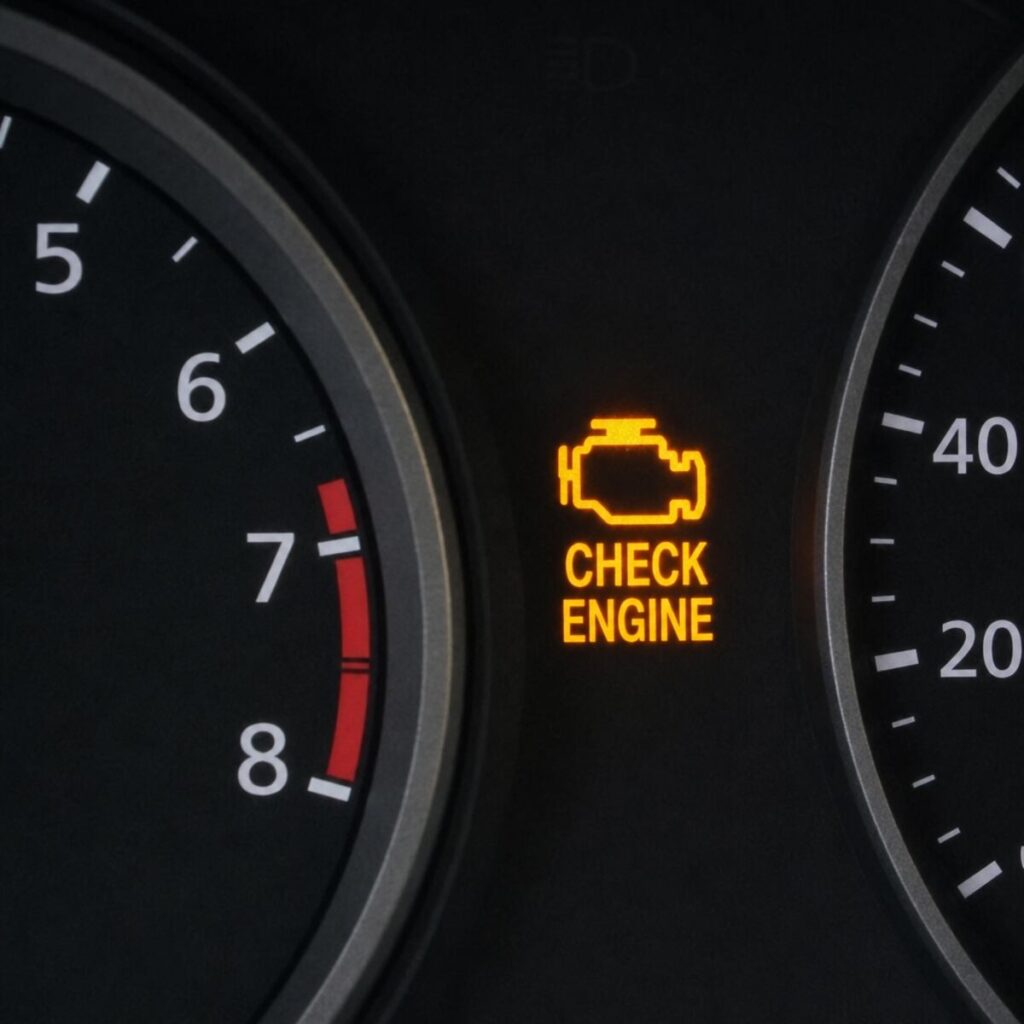
When petrol strips this lubrication away, metal-on-metal friction occurs instantly. High-pressure fuel pump damage symptoms include a sudden, catastrophic loss of engine power, an immediate check engine light, and the engine entering “limp mode.”
Worse still, as the pump grinds itself apart, it creates microscopic metal shavings (swarf). This metal swarf is pushed directly into the fuel injectors and the rest of the engine, causing a domino effect of destruction.
Symptoms of Diesel in a Petrol Engine
Though it’s harder to do because of nozzle sizes, putting diesel in a petrol car still happens. Petrol engines rely on spark plugs to ignite a highly combustible petrol-air mixture. Diesel is thick and oily and requires high compression—not a spark—to ignite.
If you introduce diesel to a petrol engine, the symptoms include:
- Engine Misfires: The spark plugs will struggle to ignite the thick diesel, causing the engine to misfire, sputter, and jerk.
- Fouled Spark Plugs: The oily diesel will quickly coat the spark plugs, rendering them useless.
- Thick Smoke: You will likely see heavy, dark smoke coming from the exhaust as the engine tries and fails to burn the dense fuel.
- Stalling: The engine will eventually choke on the heavy fuel and stall.
While frustrating, putting diesel in a petrol car is generally less destructive than putting petrol in a diesel car. The engine simply stops working because the fuel won’t ignite properly, rather than tearing itself apart through a lack of lubrication.
The Golden Rule: What to Do If You Put Gas in a Diesel Car
If you are standing at the pump and realize you have just filled your tank with the wrong fuel, your immediate actions will dictate the final cost of the repair.
If you are wondering what to do if you put gas in a diesel car, follow these steps with absolute strictness:
1. Do Not Start the Engine (Do Not Even Turn the Key)
This is the single most critical piece of advice in this entire guide. Do not put the key in the ignition. In many modern cars, simply turning the key to the “accessories” position (to roll down a window or turn on the radio) primes the fuel pump.
This action sucks the contaminated fuel out of the tank and pushes it into the fuel lines. Once the wrong fuel enters the lines, the cost and complexity of the repair increase exponentially.
2. Inform the Petrol Station Staff
Walk inside and tell the cashier what has happened. They deal with this scenario regularly. They will likely place cones around your vehicle to prevent other drivers from getting trapped behind you, and may help you push the car to a safe parking spot away from the active pumps.
3. Put the Car in Neutral and Push
If your car is a manual, put it in neutral, release the handbrake, and push it to a safe space. If you have an automatic, consult your owner’s manual on how to shift the car into neutral without fully engaging the ignition system.
4. Call for Professional Help
You now need to arrange for a mobile fuel drain. Do not attempt to siphon the fuel yourself, and do not let an enthusiastic bystander try to help you “flush” it out. You need professional, specialized equipment.
The Ripple Effect: Starting the Engine with Incorrect Fuel Consequences
Human instinct often tells us to “just drive it to the mechanic” or “maybe it will dilute if I top it up.” These are fatal errors for your vehicle.
The starting engine with incorrect fuel can have severe consequences. The moment the engine turns over, the fuel pump pulls the petrol from the tank. It travels through the primary fuel lines, through the fuel filter, into the high-pressure fuel pump, and finally into the common rail and the delicate fuel injectors.
If you start the engine, a relatively inexpensive £200 / $250 tank-drain turns into a multi-stage mechanical nightmare. The petrol acts as an industrial solvent. It washes away the protective diesel film inside the pump. Within miles—sometimes just hundreds of yards—the pump begins to shred itself.
The microscopic metal fragments travel into the common rail fuel injection system. The injectors, which feature microscopic holes designed to vaporize fuel, become instantly clogged with metal debris. When this happens, a full engine rebuild or fuel system replacement is required. This can cost between £5,000 and £10,000 ($6,000 to $12,000), depending on the make and model of your vehicle.
The Rescue Operation: Professional Mobile Fuel Drain Services
Fortunately, an entire industry has sprung up to solve this exact problem on the side of the road. If you have realized your mistake at the pump, a mobile fuel drain service is your knight in shining armor.
What is Breakdown Assistance for Fuel Errors?
Specialized breakdown assistance for fuel errors involves dispatched mechanics driving vans equipped with heavy-duty pumping equipment and hazardous waste storage tanks. They come directly to your location, whether you are at a petrol station forecourt or stranded on a highway.
How to Drain a Fuel Tank Safely
You might wonder why you cannot just buy a cheap plastic siphon from a hardware store. Learning how to drain a fuel tank safely reveals why this is strictly a professional job.
- Anti-Siphon Valves: Modern cars have sophisticated anti-siphon baffles built into the filler neck to prevent fuel theft. A standard garden hose or plastic tube will simply get stuck, and you will not be able to reach the fuel.
- Explosion Risks: Petrol vapor is highly flammable. Professional drain units use specialized, grounded, ATEX-approved pumping equipment that eliminates the risk of static electricity causing a spark and igniting the fumes.
- Environmental Regulations: You cannot just dump fifty liters of contaminated petrol/diesel mixture down a drain. It is classified as highly toxic hazardous waste. Professional services have licenses to transport and dispose of this chemical mixture safely.
Mobile Fuel Drain Service Costs
You are likely wondering about the financial hit. Mobile fuel drain service costs vary depending on several factors, but they are vastly cheaper than replacing an engine.
- Standard Drain (Engine Not Started): If you realized your mistake at the pump and did not turn the key, the mechanic only needs to drain the tank. This typically costs between $200 and $350 (£150 to £250).
- Full System Flush (Engine Started): If you drove the car and it broke down, the mechanic has to work much harder. They must drain the tank, but they also have to flush the entire fuel system. This service generally costs between $350 and $600 (£250 to £450).
- Time of Day/Location: If you require a call-out at 2:00 AM on a Sunday on a remote highway, expect to pay a premium emergency surcharge.
The service fee generally covers the call-out, the extraction of the wrong fuel, the safe environmental disposal of the contaminated mixture, and usually enough correct fuel (a few liters) to allow you to drive to the nearest pump to fill up properly.
Deep Cleaning: The Accidental Engine Contamination Recovery Process
If you unfortunately drove the vehicle before realizing the error, the recovery process requires serious mechanical intervention. A simple tank drain is no longer sufficient.
Accidental engine contamination recovery is a methodical process that mechanics use to purge the solvent from your diesel engine’s veins, or the oily diesel from your petrol engine’s system.
Clearing Contaminated Fuel Lines
The first step after emptying the main tank is clearing contaminated fuel lines. Mechanics will disconnect the primary fuel lines running from the back of the car to the engine bay. Using specialized pneumatic equipment, they will blow compressed air or a safe flushing fluid through the lines to force out every drop of the incorrect fuel.
Flushing the Fuel System After Misfueling
Once the lines are clear, the focus moves to the engine components. Flushing the fuel system after misfueling involves replacing the fuel filter immediately. The old filter will be saturated with the wrong fuel and, in the case of a diesel vehicle, may show early signs of metal swarf.
The mechanic will then introduce a specialized cleaning agent or a pristine batch of the correct fuel. They will manually prime the fuel pump—bypassing the ignition—to pull this clean fuel through the high-pressure pump and the common rail, pushing out the remnants of the contaminated mixture through the return lines.
Common Rail Fuel Injection Repair
If the vehicle was driven until it stalled aggressively, flushing might not be enough. The delicate injectors may have sustained damage.
Common rail fuel injection repair is a complex and expensive procedure. The “common rail” is essentially a high-pressure pipe that stores fuel and feeds it to the individual injectors. If metal shavings from a dying high-pressure pump have entered this rail, the entire system must be removed.
Mechanics must detach the injectors, send them off for ultrasonic cleaning and flow testing, and thoroughly flush the high-pressure rail. If the injectors are scored or damaged beyond repair, they must be replaced. At hundreds of dollars per injector, the costs of misfueling skyrocket.
A Different Danger: The AdBlue Mistake
While putting petrol in a diesel car is the most notorious error, modern diesel owners face a secondary, equally dangerous threat: misfueling with AdBlue.
AdBlue is a liquid exhaust fluid made of urea and deionized water. It is injected into the exhaust system of modern diesel vehicles to reduce harmful nitrogen oxide emissions. It has its own dedicated tank, usually distinguished by a smaller, blue filler cap located next to the main diesel filler cap.
Because the caps are placed so close together, distracted drivers occasionally pour AdBlue directly into the main diesel fuel tank.
Why AdBlue in Diesel is Disastrous
AdBlue is essentially mostly water. Introducing water into a high-pressure diesel injection system is catastrophic. Furthermore, the urea in AdBlue is highly corrosive to the metals used in internal combustion engines. If pumped through the fuel system, it will cause rapid, irreversible rusting and corrosion of the fuel lines, pump, and injectors. The urea also crystallizes as it dries, physically blocking the fuel pathways.
AdBlue in Diesel Tank Removal
If you pour AdBlue into your diesel tank, the rule is exactly the same: DO NOT START THE ENGINE.
AdBlue in diesel tank removal requires immediate professional intervention. The tank must be completely drained, dropped, and often thoroughly washed and dried to ensure no water or corrosive urea remains. If the engine is started and AdBlue enters the high-pressure fuel system, the damage is almost always fatal to the fuel system, necessitating thousands of dollars in replacement parts.
The Financial Safety Net: Insurance and Misfueling
Given the high costs associated with accidental engine contamination, drivers understandably look to their insurance providers for relief. But does insurance cover putting the wrong fuel in a car?
The answer depends on your specific policy, location, and the level of coverage you purchased. It is rarely a simple “yes” or “no.”
Misfueling Insurance Coverage Details
Standard, basic liability or third-party insurance will almost never cover misfueling. This type of insurance is designed to protect other people and property if you cause an accident, not to cover mechanical damage to your own vehicle resulting from your actions.
However, if you have a comprehensive insurance policy, you might have a lifeline. Many comprehensive policies view misfueling as “accidental damage.”
When reviewing your misfueling insurance coverage details, look for the following caveats:
- Drainage vs. Repair: Some policies will cover the cost of a mobile fuel drain to safely empty the tank. However, if you started the engine and caused $5,000 in damage to the fuel pump and injectors, they might refuse the claim, arguing that turning the key was a secondary act of negligence.
- Add-on Policies: In many regions, misfueling coverage is an optional “add-on” that must be purchased alongside your standard policy. If you did not explicitly tick the box for misfueling cover when setting up your insurance, you may be out of luck.
- Breakdown Cover Restrictions: If you have roadside assistance or breakdown cover (like AAA in the US, or the AA/RAC in the UK), standard memberships often do not cover the specialized equipment needed for fuel drains. You may have to pay a premium rate, or the breakdown service may simply tow you to a garage rather than fixing the issue on the spot.
- Excess/Deductible Considerations: Even if your insurance covers a £250 tank drain, if your policy excess (deductible) is £300, it makes zero financial sense to file a claim. You will pay out of pocket anyway, and you risk losing your no-claims discount or having your future premiums increase.
Always call your insurance provider directly if you are unsure. However, for a simple tank drain (where the engine was not started), paying out of pocket is usually the most cost-effective option.
How to Prevent Putting the Wrong Fuel in Your Car
Once you have experienced the panic, inconvenience, and expense of a wrong-fuel incident in a car, you will want to ensure it never happens again. Fortunately, there are highly effective strategies and inexpensive devices designed to idiot-proof the refueling process.
1. Install a Misfueling Prevention Device
The market offers several clever mechanical solutions to stop petrol nozzles from entering diesel tanks. Devices like the “Diesel Guard” or the “SoloDiesel” cap replace your standard fuel cap.
These devices feature a physical barrier—a set of locking mechanisms that only push open when a wider diesel nozzle is inserted. If you attempt to push a narrow petrol nozzle into the device, the barrier remains locked shut, making it physically impossible to fill the tank with petrol. These devices usually cost under $50 (£40) and are the best investment a diesel owner can make.
2. Utilize Visual Reminders
Sometimes, a simple visual cue is all it takes to break a trance.
- Buy a bright yellow “DIESEL ONLY” or “PETROL ONLY” sticker and place it directly on the inside of the fuel door.
- If you frequently switch between vehicles, leave a brightly colored post-it note on the dashboard or near the fuel gauge of the car you are currently driving.
3. Read Before You Squeeze
Make it a rigid, unbreakable habit: your hand does not squeeze the trigger until your eyes have read the label on the pump handle. Do not rely on color alone, as pump colors can vary wildly between different brands and different countries. Read the word “Diesel” or “Unleaded” every single time.
4. Stay Present at the Pump
Avoid using your mobile phone while refueling. Do not try to discipline children in the back seat while reaching for the pump. Treat the act of dispensing highly flammable, chemically complex liquids into an expensive machine with the mindfulness it deserves.
Conclusion: Keep Calm and Step Away from the Ignition
Putting the wrong fuel in car is a deeply frustrating experience, but it does not have to be an apocalyptic event for your vehicle. The entire outcome hinges on your immediate actions upon realizing the error.
To summarize the most critical takeaways:
- Recognize the signs: Pay attention to the smell, the pump handle, and your receipt. If driving, be hypersensitive to sudden loss of power, smoke, or violent engine juddering.
- Do not turn the key: If you realize the mistake at the pump, leave the keys in your pocket. The cost difference between draining a tank and rebuilding an engine is thousands of dollars.
- Call the professionals: Do not attempt a DIY fix. Professional mobile fuel drain services have the ATEX-approved equipment to handle volatile chemicals safely and legally.
- Understand the mechanics: Knowing how petrol destroys the lubricity of a high-pressure diesel pump, or how urea crystallizes in fuel lines, highlights exactly why patience and professional flushing are non-negotiable.
- Check your policy: Review your insurance to understand if accidental fuel contamination is covered, but weigh the excess cost before making a claim for a simple drain.
Mistakes happen to the best of drivers. By remaining calm, keeping the engine off, and calling in the experts to purge the contaminated fuel lines, your car can make a full recovery, and you can get safely back on the road with a valuable lesson learned.