


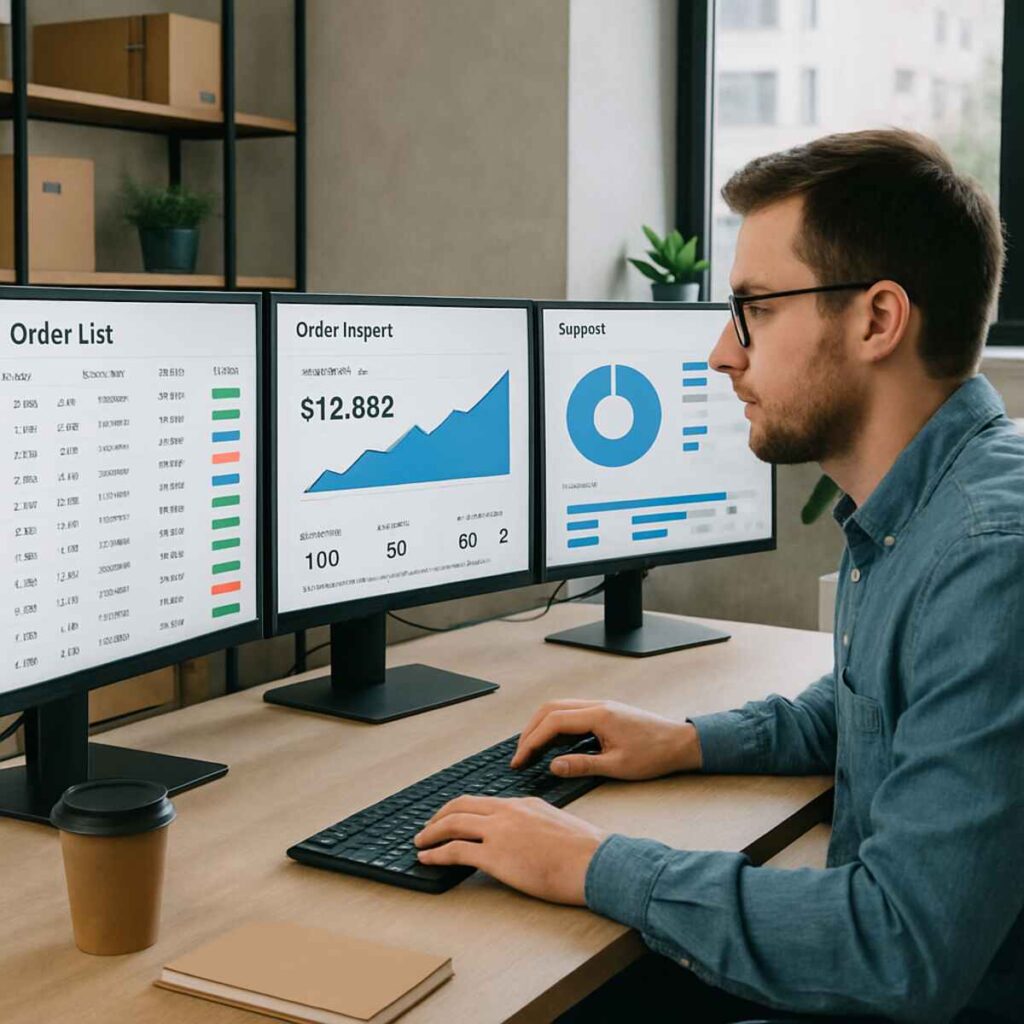
Imagine launching your e-commerce store, running a highly successful ad campaign, and waking up to hundreds of new sales. The initial euphoria is incredible. But as the adrenaline fades, a daunting reality sets in: you now have to process, route, and fulfill every single one of those orders without ever touching the physical inventory. Select the best dropshipping order management.
This is the dual-edged sword of the dropshipping model. While it frees you from the financial burden of warehousing and upfront inventory purchases, it shifts the operational pressure directly onto your backend logistics. If your backend is a chaotic web of spreadsheets, manual emails, and disjointed supplier communications, that initial euphoria will quickly morph into operational burnout.
Mastering dropshipping order management is the critical bridge between running a small, stressful side hustle and operating a scalable, highly profitable e-commerce empire. When you streamline this process, you create an invisible, well-oiled machine that works around the clock, ensuring your customers receive their products quickly, accurately, and with a smile.
In this comprehensive guide, we will dive deep into every facet of the dropshipping fulfillment lifecycle. From automating your workflows and synchronizing multi-channel inventory to handling complex return logistics, you will learn exactly how to build a resilient, scalable backend for your online store.
1. Deconstructing Dropshipping Order Management
At its core, dropshipping order management refers to the end-to-end process of capturing customer orders from your storefront, transmitting those orders to your respective suppliers, tracking the physical fulfillment of those goods, and keeping the customer informed until the package arrives at their doorstep.
Unlike traditional retail, where a warehouse team picks, packs, and ships a product from a shelf you own, dropshipping requires you to act as an orchestrator. You are managing information, not boxes.
The Standard Dropshipping Fulfillment Lifecycle
To truly streamline your operations, you must first understand the anatomy of a dropshipped order. The lifecycle generally follows these distinct phases:
- Order Placement: The customer browses your store, adds items to their cart, and completes the checkout process. Payment is captured by your payment gateway.
- Order Routing: The details of the customer’s order must be formatted and sent to the correct supplier.
- The Purchase Order: If you are dealing with professional suppliers, this step answers the common question: what is a dropshipping purchase order? It is a formal, legally binding document sent from you (the retailer) to your supplier, detailing the items purchased, the agreed-upon wholesale cost, and the customer’s shipping address.
- Processing and Packing: The supplier receives the purchase order, picks the item from their warehouse, and packs it for shipping.
- Tracking Generation: The supplier purchases a shipping label and assigns a tracking number to the package.
- Customer Update: That tracking number is routed back to your e-commerce platform and subsequently emailed or texted to your customer.
- Delivery: The package travels through the logistics network until it reaches the end consumer.
When you only receive one or two orders a day, executing these steps manually is manageable. However, as soon as your volume increases, cracks will begin to show.
2. Processing Orders: Transitioning from Manual to Automated Systems
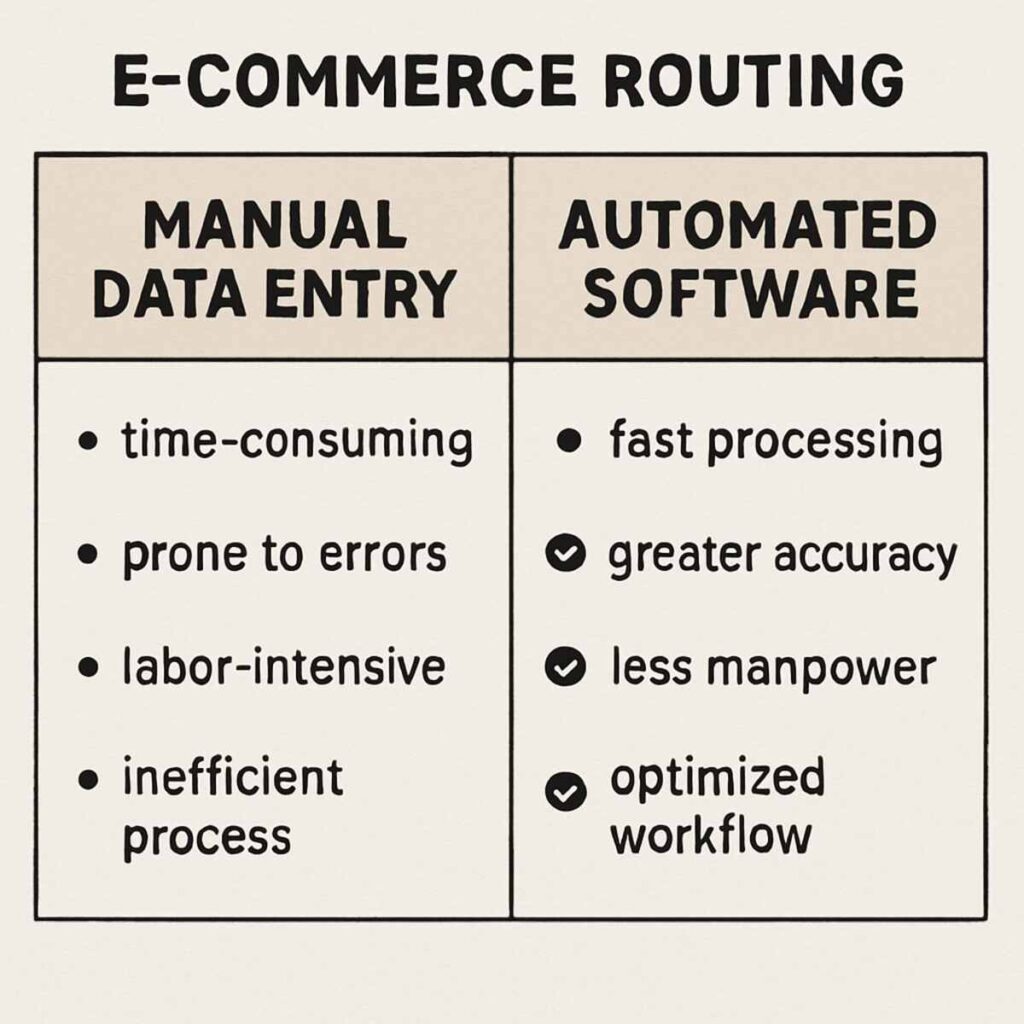
One of the most significant bottlenecks scaling dropshippers face is the way they process incoming sales. The debate between manual vs automated order processing for sellers is a critical one, and choosing the right path dictates how much time you can spend actually growing your business.
The Pitfalls of Manual Order Processing
Manual processing involves exporting order data from Shopify, WooCommerce, or BigCommerce, pasting it into a spreadsheet, and emailing it to your supplier—or worse, manually logging into a supplier’s website (like AliExpress) and typing in your customer’s details one by one.
Pros of Manual Processing:
- Requires zero upfront investment in software.
- Allows complete control over every single order detail, which can be useful when you are just starting and testing a new supplier.
Cons of Manual Processing:
- Highly prone to human error: Copy-pasting the wrong address can result in lost packages and furious customers.
- Time-consuming: Processing 50 orders manually can take hours, stealing time away from marketing and customer service.
- Unscalable: You cannot manually process a sudden spike in sales without working through the night.
Embracing Dropshipping Fulfillment Workflow Automation
To scale past a few daily orders, you must implement dropshipping fulfillment workflow automation. This involves using software that acts as a bridge between your store and your supplier’s inventory system.
When an order is placed, automation software instantly:
- Reads the order details.
- Identifies which supplier holds the product.
- Generates and transmits the purchase order automatically via API or EDI (Electronic Data Interchange).
- Pays the supplier using a pre-authorized payment method or draws from a pre-funded credit balance.
- Retrieves tracking numbers as soon as the supplier generates them and triggers the shipping confirmation email to your customer.
By automating these steps, you eliminate human error and reduce order processing time from hours to mere seconds.
Scaling with Bulk Order Processing
As your marketing efforts pay off, you may find yourself needing to handle hundreds of orders daily. This is where bulk order processing for high volume stores becomes non-negotiable.
High-volume processing allows you to group orders by supplier, geographical region, or shipping method. Instead of paying suppliers per transaction—which incurs heavy credit card fees—bulk processing enables you to download a consolidated CSV of the day’s orders, upload it to your supplier’s portal, and pay one single invoice for the entire batch. Advanced automation tools like DSers, AutoDS, or custom ERP (Enterprise Resource Planning) systems can execute this bulk action with a single click, saving high-volume stores thousands of dollars in transaction fees and countless hours of labor.
3. Building an Unbreakable Supplier Network
Your dropshipping business is only as reliable as your weakest supplier. Because you never see the product, you are entirely reliant on your vendor to uphold your brand’s reputation regarding product quality and shipping speed.
How to Choose a Reliable Dropshipping Supplier
Finding a partner who understands the demands of modern e-commerce is critical. Knowing how to choose a reliable dropshipping supplier requires looking beyond just the lowest wholesale price. You must evaluate them as operational partners.
Here are the key criteria to assess:
- Technological Maturity: Can their systems integrate with your e-commerce platform? Do they support automated order routing, or do they insist on manual emails? A tech-forward supplier is essential for scaling.
- Location and Warehousing: If your primary market is the US, working with a supplier who only holds stock in mainland China will severely bottleneck your shipping times. Look for suppliers with domestic warehouses or distributed fulfillment networks.
- Communication Speeds: Send them a test inquiry. If it takes them 48 hours to reply to a basic question, imagine how long it will take them to resolve a lost package issue.
- Quality Control (QC) Processes: Do they offer sample orders? You should always order a sample to evaluate the packaging, the product quality, and the unboxing experience.
- Fulfillment Capacity: Ask them directly about their Maximum Daily Capacity. If your store goes viral on TikTok and you suddenly need 2,000 units shipped in a day, can their warehouse staff handle it?
Exploring Advanced Supply Chain Solutions
As you graduate from basic retail arbitrage (like standard AliExpress dropshipping), you should begin exploring professional supply chain solutions. This often involves migrating to private sourcing agents or dedicated dropshipping fulfillment agencies (like CJ Dropshipping, Zendrop, or SourcinBox).
These agencies act as aggregators. Instead of you communicating with ten different factories, the agency communicates with the factories on your behalf. They source the products, bring them to a centralized warehouse, perform quality control, and integrate directly with your store via a dedicated app.
Leveraging Third-Party Logistics (3PL) Integration
Another massive step in streamlining operations is third-party logistics integration for e-commerce. While pure dropshipping means the manufacturer handles fulfillment, many successful store owners eventually transition to a hybrid model using a 3PL.
In this model, you purchase inventory in bulk from your manufacturer to secure deep discounts, but instead of shipping it to your garage, you freight it directly to a 3PL warehouse located in your target country (e.g., ShipBob or ShipMonk). The 3PL integrates with your Shopify or WooCommerce store. When an order comes in, the 3PL automatically picks, packs, and ships the item via fast domestic carriers. This gives you the speed and reliability of a massive brand while maintaining the hands-off fulfillment appeal of dropshipping.
4. Mastering Inventory Management in a Stockless System
It might seem counterintuitive to worry about inventory management when you don’t physically own any stock. However, in dropshipping, managing inventory actually means managing data. You are selling items based on the assumption that your supplier has them ready to ship. When that assumption is wrong, operational chaos ensues.
The Challenge of Ghost Inventory
“Ghost inventory” occurs when your website displays a product as “In Stock,” but your supplier’s warehouse is actually empty. If a customer buys this item, you are forced to either delay their order indefinitely or cancel and refund it, resulting in a terrible customer experience and a lost sale.
To prevent this, you need rigid inventory synchronization across multiple sales channels. If you are selling on your primary website, an Amazon storefront, and a TikTok Shop simultaneously, a single pool of supplier inventory is being drained by multiple sources.
Robust automation software uses API calls to ping your supplier’s database every few hours (or even in real-time). If the supplier’s stock level drops to zero, the software instantly updates your Shopify, Amazon, and TikTok listings to reflect the “Out of Stock” status, preventing overselling.
Managing Out of Stock Items in Dropshipping
Even with the best synchronization tools, stockouts will eventually happen. Supply chain disruptions, raw material shortages, or unexpected viral trends can wipe out a supplier’s inventory overnight.
Managing out of stock items in dropshipping effectively is a true test of your customer service. When this happens, follow this damage-control protocol:
- Immediate Communication: Do not wait for the customer to ask where their order is. Email them within 24 hours of discovering the stockout.
- Offer Alternatives: Say, “Unfortunately, the Blue variant of the water bottle you ordered is currently on backorder due to high demand. However, we have the Black and Silver variants in stock and ready to ship today. Would you like me to swap the color for you?”
- Provide a Timeline: If they want to wait for the original item, give them a realistic (and slightly padded) restocking date provided by your supplier.
- Incentivize Patience: Offer a 10% partial refund or a future discount code to apologize for the delay.
- Prompt Refunds: If the customer prefers to cancel, process the refund immediately. Never hold a customer’s money hostage.
5. Navigating Multi-Supplier Complexity
Diversifying your supplier base is a smart risk management strategy. If Supplier A gets shut down, Supplier B keeps your business alive. However, running a store with multiple suppliers introduces a whole new layer of logistical complexity.
How to Streamline Multi-Supplier Order Routing
If a customer orders a T-shirt sourced from Supplier A in California and a coffee mug sourced from Supplier B in China, your system must know how to split that cart.
To streamline multi-supplier order routing, you need intelligent order management software (OMS). A robust OMS allows you to set up sophisticated conditional routing rules.
For example, you can program the system so that:
- Rule 1: IF Product = “T-Shirt”, THEN route purchase order to Supplier A.
- Rule 2: IF Product = “Mug”, THEN route purchase order to Supplier B.
- Rule 3: IF Customer Country = “UK”, AND Product = “T-Shirt”, THEN route to Supplier C (a European backup supplier to save on shipping).
By establishing these automated logic flows, your backend seamlessly dissects complex orders and fires the correct data to the correct vendor without you lifting a finger.
Managing Split Shipments from Multiple Vendors
The direct result of multi-supplier routing is the split shipment. When a customer pays for one order but receives two or three separate packages on different days, they can easily become confused or assume items are missing.
Effectively managing split shipments from multiple vendors relies almost entirely on proactive communication.
- Website Disclaimers: Be transparent on your FAQ page and shipping policy. State clearly: “To bring you the highest quality goods at the best prices, we partner with specialized artisans across the globe. Therefore, items in your order may ship separately.”
- Post-Purchase Emails: In the order confirmation email, reiterate that items may arrive in multiple packages.
- Segmented Tracking: Your e-commerce platform must be able to assign multiple tracking numbers to a single order ID. When Package 1 ships, the customer receives an email saying, “Part of your order has shipped! Here is the tracking for your T-Shirt. Your Coffee Mug is still being prepared.”
This level of transparency prevents a flood of “Where is the rest of my order?” support tickets.
6. Perfecting the Shipping and Delivery Experience
In the age of Amazon Prime, consumer patience for slow shipping is at an all-time low. While standard dropshipping traditionally suffered from agonizing 30-day shipping windows, modern store owners must do better.
Reducing Shipping Delays in Dropship Fulfillment
Reducing shipping delays in dropship fulfillment requires optimizing both your supplier choice and your courier networks.
- Use Premium Shipping Lines: Avoid standard, unregistered postal services (like traditional ePacket). Instead, pay the slight premium for dedicated private lines (like YunExpress, 4PX, or CJ Packet) which charter commercial flights and bypass standard postal bottlenecks, reducing transit times from weeks to 7-12 days.
- Implement Order Processing Cut-Offs: Ensure your supplier commits to a strict 24-48 hour processing window. An item sitting in a warehouse waiting to be packed is dead time.
- Localize Your Fulfillment: As mentioned earlier, utilizing 3PLs or suppliers with domestic warehouses in your primary markets is the ultimate way to eliminate cross-border shipping delays entirely.
Providing Real-Time Shipment Tracking for Customers
Once a package is in transit, the customer’s anxiety begins. Alleviating this anxiety is why real-time shipment tracking for customers is a mandatory feature for your store.
Do not simply give a customer a tracking number and tell them to go to a confusing, third-party Chinese courier website. Instead, integrate a branded tracking portal directly into your website using apps like ParcelPanel, 17TRACK, or Tracktor.
These tools pull tracking data from hundreds of global couriers, translate updates into English, and display the package’s journey on a clean, branded page on your domain. Furthermore, these apps can trigger automated email flows to update the customer at key milestones: “In Transit,” “Out for Delivery,” and “Delivered.” This drastically reduces WISMO (“Where Is My Order?”) support queries.
Commercial Invoice and Packing Slip Requirements
For cross-border dropshipping, international customs can be a major hurdle. Packages get seized or delayed at borders if they lack proper documentation.
Understanding commercial invoice and packing slip requirements ensures smooth international transit.
- The Commercial Invoice: This is a customs document. It must accurately declare the value of the goods, the description of the items, the Harmonized System (HS) tariff codes, and the country of origin. If your supplier under-declares the value to avoid taxes, and customs catches it, your package will be delayed, and your customer will be hit with hefty fines. Ensure your supplier uses honest, compliant commercial invoices.
- The Packing Slip: This goes inside the box. As a dropshipper, you want “Blind Dropshipping.” This means the packing slip should not contain your supplier’s name, their wholesale pricing, or their promotional material. It should ideally be customized to feature your store’s logo, the customer’s order details, and your support email. Negotiate blind dropshipping and custom packing slips with your supplier before launching.
7. Customer Service and the Reverse Logistics Nightmare
Even with a flawless supply chain, things will go wrong. Products get damaged in transit, customers order the wrong size, or buyer’s remorse sets in. The way you handle the reverse logistics—returns and refunds—will define your brand’s longevity.
Best Practices for Dropshipping Customer Communication
Excellent customer service is your competitive moat against massive marketplaces. Best practices for dropshipping customer communication revolve around speed, empathy, and transparency.
- Omnichannel Support: Be reachable. Offer support via email, a website contact form, and ideally, live chat. Use helpdesk software like Gorgias or Zendesk to centralize all tickets.
- Create Macros (Canned Responses): Save time by creating templates for common questions (e.g., shipping times, sizing charts, return policies). However, always personalize the greeting and the specific details of the order.
- Own the Mistakes: If a package is severely delayed, do not blame the supplier or the courier. The customer bought from you. Take accountability, apologize, and offer a solution. Empathy defuses anger.
How to Handle Dropshipping Returns and Refunds
Returns in dropshipping are notoriously complex. Because you don’t have a warehouse, where does the customer send the item back?
Knowing exactly how to handle dropshipping returns and refunds requires a documented, step-by-step Standard Operating Procedure (SOP).
Scenario A: The Item is Damaged or Defective
- Request Proof: Ask the customer to send a clear photo or video of the damaged item.
- Contact the Supplier: Forward this evidence to your supplier immediately and request a free replacement or a full refund to your account.
- Resolve for the Customer: Do not make the customer wait for your supplier to reply. Once you have photo proof of damage, immediately offer the customer a choice: a full refund or a free replacement sent via expedited shipping.
- Skip the Return: In most cases of inexpensive damaged goods, paying for return shipping to China costs more than the product itself. Tell the customer to simply keep, donate, or recycle the broken item.
Scenario B: Buyer’s Remorse or Wrong Size If the customer simply changed their mind, the logistics are harder.
- Do Not Return to the Overseas Supplier: Shipping an individual item back to a Chinese factory is expensive, takes months, and customs will likely reject it.
- Return to Your Base: Have the customer mail the item to a domestic address—either your home, your office, or a local PO Box. You can then inspect the item and either resell it domestically to the next customer who orders it, or keep it as a sample.
- Implement Restocking Fees (Optional): If return volume is high, your policy can stipulate that the buyer covers return shipping for “change of mind” returns, protecting your margins.
- Issue the Refund: Once you receive the tracked return, process the refund to their original payment method immediately.
The golden rule of returns is to ensure your Return Policy page is crystal clear, legally compliant, and easy to find on your website. Hidden policies lead to frustrating chargebacks from credit card companies, which can permanently damage your payment gateway standing.
8. Analyzing Data and Continuously Optimizing
A streamlined dropshipping order management system is never truly “finished.” The e-commerce landscape is dynamic; couriers change rates, suppliers shift focus, and new software constantly hits the market.
To maintain operational excellence, you must regularly audit your supply chain metrics.
Key Performance Indicators (KPIs) to Track
- Order Cycle Time: How long does it take from the moment a customer clicks “Buy” to the moment the supplier generates a tracking number? Aim for under 48 hours.
- Average Transit Time: Track the real-world days it takes for packages to arrive compared to what your supplier promised. If a supplier promises 8 days but averages 15, you need to have a serious conversation or find a new vendor.
- Return Rate: What percentage of orders result in a refund request? A high return rate on a specific SKU usually indicates a severe quality control issue at the factory level. Stop selling the product until it’s fixed.
- Customer Satisfaction (CSAT) Score: Use automated post-purchase surveys to ask customers to rate their buying experience.
By obsessively tracking these metrics, you shift from reactive management (putting out fires) to proactive management (optimizing the machine).
9. Future-Proofing Your Fulfillment Strategy
As the global e-commerce market continues to expand, customer expectations will only become more demanding. Two-day shipping is rapidly becoming the baseline expectation, not a luxury.
To future-proof your business, your ultimate goal should be graduating from pure dropshipping as quickly as your cash flow allows. Use dropshipping for what it is best at: low-risk product testing and market validation.
Once you find a “winning” product that sells consistently, use your profits to buy inventory in bulk. Route that inventory to domestic 3PLs. This hybrid model allows you to maintain the location independence and automated lifestyle of dropshipping, while delivering the premium, lightning-fast fulfillment experience of a major retail brand.
Conclusion: Turning Logistics into a Competitive Advantage
Many entrepreneurs enter the e-commerce space lured by the promise of passive income and easy sales, only to be crushed by the administrative weight of processing orders, dealing with angry emails, and chasing down lost packages.
By mastering dropshipping order management, you flip the script. You transform a potential point of failure into a distinct competitive advantage.
When you automate your workflows, meticulously select your suppliers, synchronize your inventory across all channels, and handle returns with grace, you build more than just a storefront—you build a resilient business infrastructure. This infrastructure allows you to process 10 orders or 10,000 orders with the exact same amount of effort.
Stop viewing logistics as a chore. View it as the engine of your growth. When your backend operations run silently and flawlessly in the background, you are finally free to focus on what truly matters: marketing, brand building, and scaling your e-commerce vision to its ultimate potential.