


Have you ever heard of a single Pokémon card selling for the price of a small car and felt a little intimidated? For many, this is their first impression of the hobby, and it can feel like you need a big budget just to get started. This perception comes from the traditional way these games are sold, a model known as the Collectable Card Game (CCG), or Trading Card Game (TCG). To find more, check on klik disini
In powerhouse games like Magic: The Gathering, you expand your collection by buying sealed “booster packs.” Each pack contains a small, random assortment of cards, making the experience feel a bit like a lottery. You might get exactly what you need, but more often you’ll find duplicates and cards that don’t fit your strategy, all while hoping to find that one powerful, elusive card hidden inside.
This system is built on the concept of card rarity. Some cards are intentionally printed in far smaller quantities, making them “rare.” In practice, this often means that players willing to spend more money on packs have a much higher chance of acquiring the most powerful cards. This can create an uneven playing field where a bigger wallet, not justa better strategy, can have a major impact on who wins.
The ‘Buy-the-Book’ Model: What Exactly Is a Living Card Game?
You’ve probably seen the foil-wrapped “booster packs” for card games before, where the contents are often a complete mystery. Living Card Games, or LCGs, throw that entire model out the window. Instead, imagine buying a new Lego set or the next chapter of a book; you know exactly what’s in the box because the contents are listed right on the back.
This simple but powerful concept is called a fixed distribution card game model. Popularized by the company Fantasy Flight Games, this system ensures that every copy of a specific product contains the same set of cards. If you and a friend both buy the Whispers of the Deep expansion pack, you will both get the identical collection of cards. There are no “rare” or “common” cards in the traditional sense, which completely removes the need to chase down expensive singles on the secondary market.
Think of it like a new season of your favorite TV show being released on Blu-ray. The first thing you buy is the “Core Set,” which is like the big box for Season 1. It gives you everything you need to start playing. Later, if you want to continue the story or get more options, you can buy expansion packs. Each pack is like a new episode, adding specific new characters, challenges, and adventures to your collection. Crucially, everyone who buys that “episode” gets the same content.
Ultimately, this shift from random packs to a fixed-and-known set changes the entire focus of the experience. The game stops being about who was luckier or who could afford to buy more packs. Instead, it becomes a true contest of strategy, deck-building skill, and wit. You and your opponents have access to the same pool of cards, creating a level playing field from the moment you open the box.
Why ‘Fixed’ is Fantastic: Predictable Costs and Fairer Fights
So, what does this “fixed” model actually mean for your wallet and your game nights? The most immediate benefit is that your spending becomes completely predictable. You are no longer gambling on random packs, hoping to pull the one card you need. Instead, you can look at an upcoming expansion, see exactly what cards it contains, and decide if it’s something you want for your collection. This transforms the hobby from a potential money pit into a manageable budget item, much like buying a new board game or a DLC for a video game. You are always in control of what you buy and when you buy it.
This commitment to fairness extends directly to the kitchen table. Because everyone has access to the same card pool, the game shifts away from being “pay-to-win.” You’ll never lose a match simply because your opponent was able to buy a case of booster packs and find ultra-rare cards that you can’t access. When you and a friend sit down to play, you are on a level playing field. Victory comes down to who built a smarter deck and made better decisions during the game, not who has the bigger budget.
Ultimately, this model is designed to put the focus back where it belongs: on the game itself. It delivers a much more rewarding experience by prioritizing:
- A Predictable Budget: You only buy the content you want, and you always know what you’re getting.
- Fair Competition: Success is based on skill and strategy, not the size of your collection.
- A Focus on Fun: More time is spent playing and strategizing, and less time is spent chasing expensive cards.
This simple change allows the game’s creativity and strategic depth to shine, creating a rich and engaging hobby without the financial barrier.
Your First Step: What’s Inside an LCG ‘Core Set’?
All this talk of fair play and predictable costs sounds great, but where do you actually begin? Thankfully, jumping into a Living Card Game is refreshingly simple. Unlike games that require you to hunt down starter decks and random boosters, every LCG has a single, clear starting point designed for newcomers: the Core Set.
Think of the Core Set as the main board game. It’s the big box you buy one time that contains everything you need to learn and play. It establishes the world, teaches you the rules, and provides your foundational collection of cards. This single purchase is your ticket to the entire game system, ensuring you have the same essential tools as every other player. There’s no separate “starter deck” or introductory product to worry about; the Core Set is it.
When you lift the lid on a Core Set, like the one for Marvel Champions: The Card Game shown here, you’ll find much more than just a stack of cards. It comes packed with comprehensive rulebooks to guide you, punch-out cardboard tokens for tracking things like damage and resources, and of course, all the cards needed for your first games. It is a complete and self-contained experience, giving you everything necessary to set up and play your first session within minutes of opening the box.
Best of all, this single box is designed to get you playing immediately. Most Core Sets contain enough components for one or two players to dive right in (some, like Lord of the Rings: The Card Game, even specialize in solo play). You and a friend can learn together, tackling the initial scenarios and exploring the basic strategies the game has to offer. While this box provides a complete, replayable game on its own, it also serves as the foundation for a hobby that can grow with you over time.
How Your Game Evolves: The Role of LCG Expansions
While the Core Set provides a fantastic, replayable game all on its own, one of the most exciting aspects of a Living Card Game is that the adventure can grow with you. Unlike a traditional board game that remains the same forever, an LCG receives new content over time through optional expansion packs. This is what makes it an “expandable card game”—the world and your collection can evolve. Think of your Core Set as the first season of a great TV show; expansions are the subsequent seasons, special episodes, and new characters that keep the story fresh and exciting.
So, how do LCG expansions work? They are released in a few different formats, but you can generally sort them into two sizes. First, there are large “Campaign” or “Cycle” expansions. These are bigger boxes that often kick off a major new storyline, complete with multiple new scenarios and a large batch of player cards. Then, there are smaller “Hero Packs” or “Mythos Packs.” These are slim packs that add a single new hero to play or one new chapter to an ongoing story. Crucially, they are all completely optional additions to your collection.
Regardless of the size, every expansion pack holds true to the core promise of the LCG model: you always know exactly what you are buying. Whether it’s a big box or a small pack, the contents are fixed and listed on the back. You get a full set of the new cards with no random chance involved. This model, pioneered by the Fantasy Flight Games LCG system, ensures that you can add new villains, heroes, or story beats to your game without ever having to hunt for rare cards.
This approach puts you in complete control of your hobby. You can enjoy the Core Set for months, buy a single Hero Pack for a character you love, or follow an entire epic campaign from start to finish. This might sound like you’ll soon be drowning in cards, leading to another common question: do you need to be a genius to figure out which ones to use?
Does ‘Deckbuilding’ Mean I Need to Be a Genius? (No)
The word “deckbuilding” can sound intimidating, like you need a Ph.D. in statistics just to play. In reality, it’s nothing more than choosing which cards from your collection you want to use for a particular game. Think of it like packing a toolbox for a specific job. You have all your tools (your card collection), and you just need to pick the right hammers, screwdrivers, and wrenches (your hero, allies, and equipment cards) for the task ahead. It’s a core part of the fun, but it’s about personal choice, not complex calculations.
But what if you don’t want to choose? Many modern LCGs, like the popular Marvel Champions: The Card Game, have you covered. The rulebook often includes pre-built “starter deck” lists, telling you exactly which cards to pull from the box to get a functional, fun deck for your first few games. This lets you skip the customization entirely and jump straight into the action. You can play for hours, or even months, using these recommended setups before ever feeling the need to change a single card.
Over time, you might find yourself thinking, “What if I swapped this card for that one?” That’s the moment deckbuilding transforms from a concept into a fun, creative part of the hobby. It becomes your chance to put a personal stamp on your strategy, tailoring a hero or faction to your exact playstyle. This optional layer of personalization is where many players find long-term enjoyment, but it’s a path you can explore at your own pace. The most important thing is finding a game with a world you want to dive into.
Find Your Adventure: Three Popular LCGs to Get You Started
Now that you know how the games work, the real question is: what kind of story do you want to be a part of? The beauty of LCGs is that they span every imaginable genre, offering polished adventures in a box. While there are dozens of non-collectible card game examples, most newcomers find their footing with one of three major titles, each offering a completely different feel.
If you want to jump straight into the action, Marvel Champions: The Card Game is an excellent starting point and one of the best cooperative card games for beginners. Each game is a standalone mission where you and your friends pick a hero (like Spider-Man or Captain Marvel) and try to take down a classic villain. It’s fast, punchy, and perfect for a weeknight game session. You can play a full, satisfying game in about an hour and then reset for another go, making it less of a commitment and more of a superhero “boss battle” in a box.
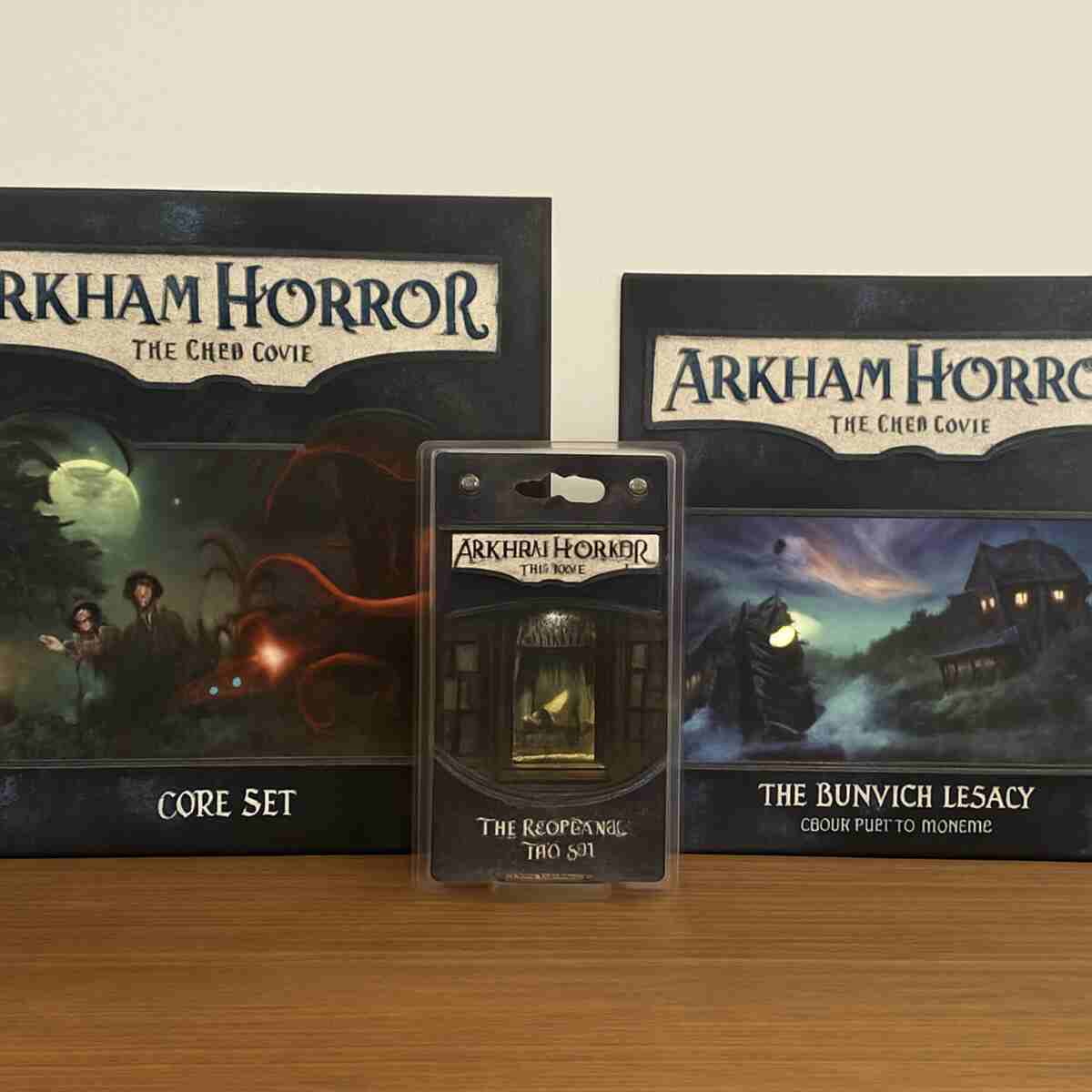
For those who prefer a deep, unfolding mystery, there’s Arkham Horror: The Card Game. This is a stark contrast and a common point of comparison when people ask about Marvel Champions vs Arkham Horror. Instead of a one-off battle, Arkham is a full campaign, like a season of a spooky detective show. You create an investigator and guide them through a series of connected scenarios, making choices that carry over from one session to the next. The experience is driven entirely by its narrative, where the Arkham Horror the Card Game rules evolve to tell a terrifying, branching story.
These games are just the tip of the iceberg, but they represent the core experiences you can find. To make it simple, think of them this way:
- Marvel Champions: The Card Game: For fast-paced, repeatable superhero action.
- Arkham Horror: The Card Game: For deep, narrative horror investigations that form a campaign.
- The Lord of the Rings: The Card Game: For challenging, epic fantasy quests that feel like solving a complex puzzle.
The best part is that you don’t always need a full team of adventurers to tackle these challenges. Many of these cooperative games are designed from the ground up to be just as engaging when played by yourself, offering a rich solo experience that can rival any single-player video game.
Looking for a Great Solo Game? Many LCGs Are Built for One
That idea of playing alone might be the most surprising part of this whole hobby. When we think of card games, we usually picture a head-to-head duel. But the most popular LCGs aren’t competitive; they’re cooperative. This means all players are on the same team, working together to overcome challenges presented by the game itself. It’s not about outsmarting another person—it’s about outsmarting the system.
This cooperative design is precisely what makes them some of the top solo playable card games on the market. Since the game has its own automated rules for running villains or advancing a story, you don’t need an opponent. You simply become a team of one, tackling the exact same rich, strategic puzzles you would with a group. This makes them among the best cooperative card games for beginners, as you can learn the rules at your own pace without pressure.
For many people, this is the real magic of the LCG model. In a world dominated by digital screens, these games offer a deep, engaging, and wonderfully tactile solo hobby. It’s a chance to unplug and immerse yourself in a complex challenge, whether you’re solving a dark mystery or battling a supervillain on your kitchen table. You don’t need a game night to have an adventure—sometimes the best ones are the ones you have by yourself.
Your Next Move: How to Start Your LCG Journey Today
You’ve just unlocked a new way to look at the world of strategic card games. The intimidation factor—the endless booster packs, the hunt for rare cards, the worry of an unbalanced game—is no longer a barrier. You can now spot the difference between a game that demands endless spending and one that offers a complete, curated adventure right out of the box.
So, where do you go from here? Getting started with a living card game is as straightforward as picking up a new board game. The best part is that you already have all the knowledge you need to take the first step.
Here’s your simple plan for how to start playing LCGs:
- Pick a Theme That Excites You. Do you love cosmic horror, epic fantasy, or superhero showdowns? Your interest in the world is the perfect starting point.
- Find That Game’s “Core Set”. This is a one-time purchase that contains everything needed for you and a friend to play. It’s the foundation of your new hobby.
- Visit a Local Game Store or Search Online. A Core Set is an easy item to find. Don’t be afraid to ask for a recommendation at a store—they are there to help!
Ultimately, choosing a living card game isn’t about navigating a complex market; it’s about choosing your next adventure. The low cost of getting into a new LCG means you’re simply picking a story you want to be a part of. Welcome to a hobby designed to grow with your passion, not your wallet.
