


Whether you are commuting down the 101, navigating the scenic routes of Interstate 280, or just running errands around El Camino Real, driving in the Bay Area comes with its share of hazards. Construction debris, kicked-up gravel from commercial trucks, and sudden temperature fluctuations can all wreak havoc on your vehicle’s windshield. The Interesting Info about auto glass menlo park.
When that inevitable rock strikes your glass, finding reliable auto glass Menlo Park services becomes an immediate priority. Your car’s windshield is not just a shield against the wind and rain; it is a critical structural component of your vehicle’s safety system. Ignoring a small chip can quickly lead to a massive crack, compromising your safety and leading to more expensive repairs down the line.
In this comprehensive guide, we will explore everything you need to know about navigating auto glass repair and windshield replacement in Menlo Park. From understanding the sophisticated technology embedded in modern windshields to decoding insurance claims and finding the best local technicians, this article is your ultimate resource for maintaining clear, safe, and structurally sound auto glass.
The Critical Role of Your Vehicle’s Auto Glass
Many drivers view auto glass as a simple cosmetic feature or a barrier against the elements. In reality, modern automotive glass is a highly engineered safety device. Understanding its function is the first step in recognizing why prompt auto glass repair is so vital.
Structural Integrity and Rollover Protection
Your windshield contributes up to 45% of the structural integrity of your vehicle’s cabin in a front-end collision, and up to 60% in a rollover accident. If the glass is compromised by a severe crack or an improper windshield replacement, the roof is much more likely to cave in during a rollover, putting the occupants at extreme risk.
Airbag Deployment Support
Passenger-side airbags are designed to bounce off the inside of the windshield before expanding toward the passenger. If the windshield is weakened by damage, or if the adhesive used during a replacement has not fully cured, the explosive force of the airbag can blow the windshield entirely out of the frame. This renders the airbag useless and leaves the passenger unprotected.
Advanced Driver Assistance Systems (ADAS)
Today’s vehicles are essentially computers on wheels. The windshield houses an array of sophisticated sensors and cameras that power Lane Departure Warnings, Automatic Emergency Braking, and Adaptive Cruise Control. Because these systems “see” through the glass, maintaining crystal-clear, flawless auto glass in Menlo Park is not just about visibility—it is about keeping your vehicle’s electronic safety net fully functional.
Understanding Your Glass: Laminated vs. Tempered
Before diving into repair options, it is essential to understand the difference between tempered and laminated glass. Vehicles use both types, but they serve very different purposes and behave differently when broken.
Laminated Glass: The Windshield Standard
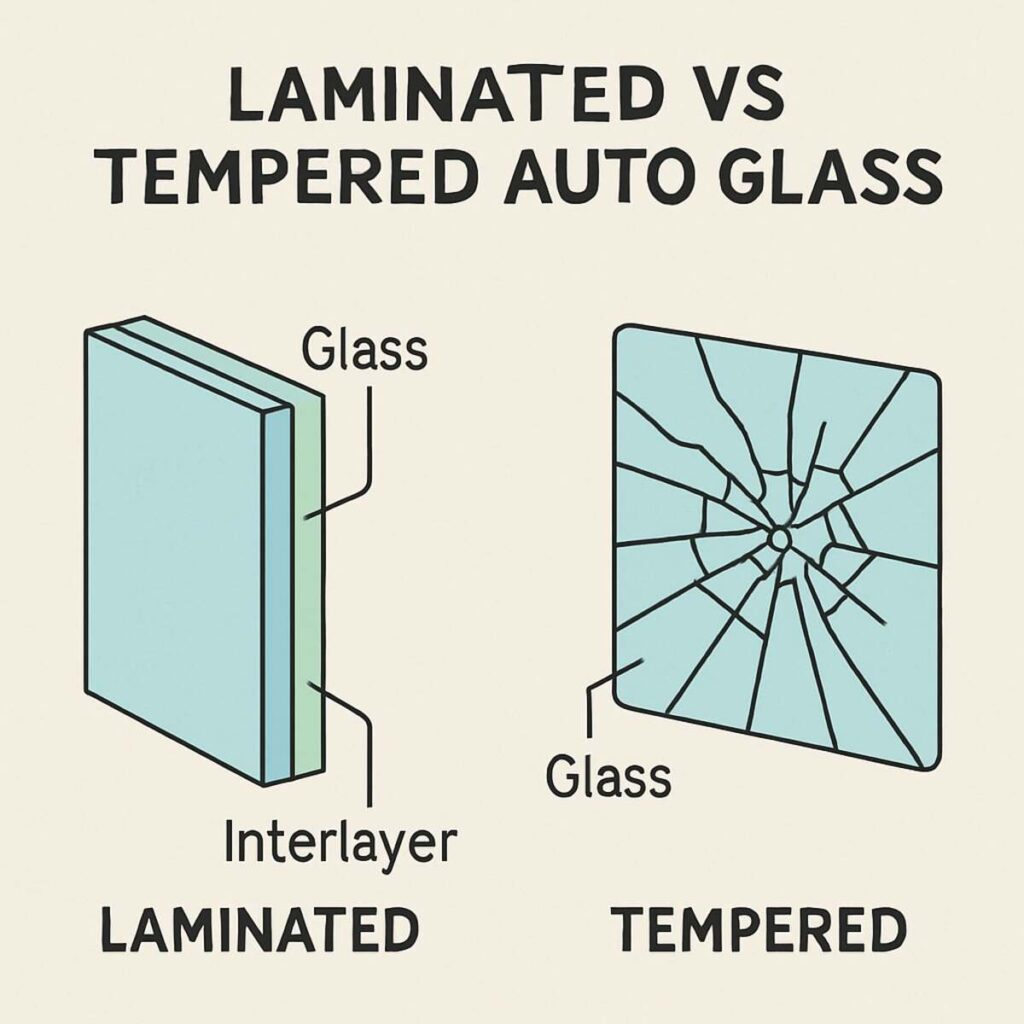
Laminated glass is created by sandwiching a thin layer of polyvinyl butyral (PVB) plastic between two layers of glass. Under high heat and pressure, these three layers fuse together.
The primary safety benefits of laminated auto glass include:
- Shatter Resistance: When impacted, the outer layer of glass may break, but the PVB inner layer holds the broken pieces together. This prevents glass shards from flying into the cabin and blinding or injuring occupants.
- Penetration Resistance: The tough plastic interlayer keeps outside objects—like rocks, debris, or even pedestrians—from entering the vehicle.
- Repairability: Because the damage is often confined to the outer layer of glass, minor rock chips and cracks can be repaired without replacing the entire windshield.
Tempered Glass: Side and Rear Windows
Tempered glass undergoes a rapid heating and cooling process during manufacturing, creating immense internal tension. This process makes it four to five times stronger than standard glass of the same thickness.
However, the defining difference between tempered and laminated glass is how it breaks. When tempered glass is struck with enough force, it shatters instantly into thousands of tiny, pebble-like dull pieces rather than jagged shards. This prevents severe lacerations during an accident. Because tempered glass shatters completely upon impact, it cannot be repaired—it must always be replaced.
Assessing the Damage: When to Repair vs. Replace
The moment a rock hits your windshield, you are on the clock. Bay Area temperature swings—chilly morning fog turning into blazing afternoon sun—cause the glass to expand and contract. This thermal stress can cause a microscopic chip to run across the entire windshield in a matter of hours.
Fixing a chipped windshield before it spreads is the most cost-effective and environmentally friendly choice you can make. But how do you know if your glass qualifies for a repair?
When Auto Glass Repair is Sufficient
A professional rock chip repair process can usually be performed if the damage meets the following criteria:
- Size: The chip is smaller than a quarter (about 1 inch in diameter), or the crack is less than 3 inches long.
- Depth: The damage has only penetrated the outer layer of glass and has not reached the PVB plastic interlayer or the inner glass layer.
- Location: The chip is not in the driver’s direct line of sight. Repair resins can leave a slight optical distortion; if this distortion is right in front of the driver, it can be a dangerous distraction.
- Edge Proximity: The crack or chip is not touching the outer edge of the windshield. Cracks that reach the edge compromise the structural seal of the glass.
Common Types of Repairable Chips
- Bullseye: A circular chip with a clear cone in the center.
- Star Break: A small central impact point with cracks radiating outward like a star.
- Half Moon: Similar to a bullseye, but not completely circular.
- Combination: A mix of a star break and a bullseye.
When Windshield Replacement is Mandatory
If the damage exceeds the repair criteria, a full windshield replacement is necessary. You will need a replacement if:
- The crack is longer than a dollar bill (though some advanced shops can repair up to 6 inches, it is often not recommended for safety reasons).
- There are more than three chips on the windshield.
- The damage is in the driver’s primary viewing area.
- The glass is deeply pitted from years of driving behind sand and gravel trucks.
- The inner layer of glass or the PVB plastic has been compromised.
The Art and Science: Professional Rock Chip Repair Process
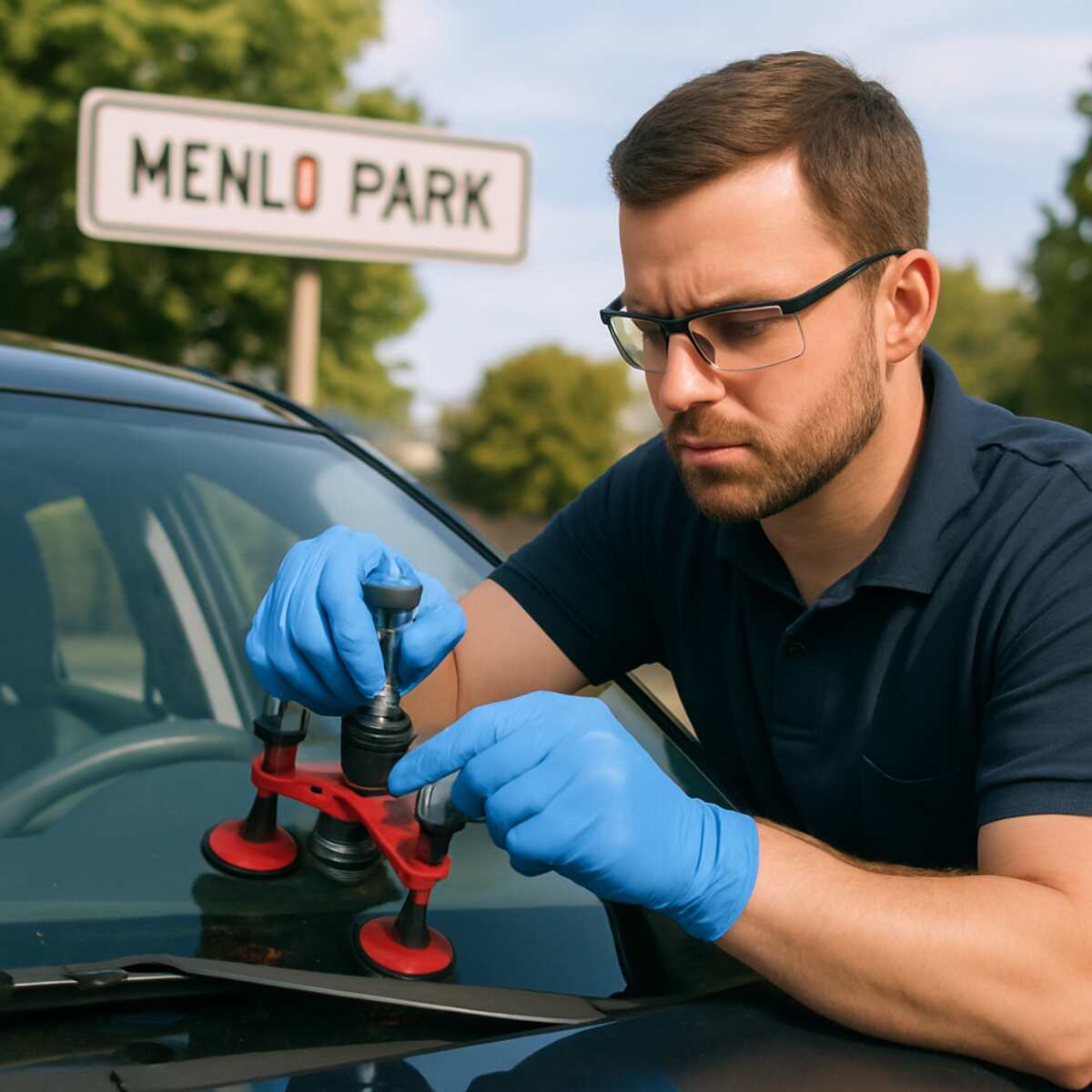
Many hardware stores sell DIY windshield repair kits, but trusting a professional auto glass Menlo Park technician is highly recommended. Improperly repaired chips can still spread, and once a DIY repair fails, a professional cannot fix it—the resin has already hardened in the cracks, meaning you will be forced to buy a new windshield.
Here is an inside look at the professional rock chip repair process:
- Cleaning and Preparation: The technician carefully removes loose glass shards and debris from the impact point using a specialized scribe tool. The area must be completely dry and clean.
- Creating a Vacuum: A specialized bridge tool is mounted to the windshield, directly over the chip. The tool creates a vacuum, sucking the trapped air out of the microscopic cracks. This is a critical step; if air remains in the crack, the resin will not penetrate fully.
- Resin Injection: Once the air is removed, a high-quality, optically clear acrylic resin is injected into the void under high pressure. The technician alternates between pressure and vacuum cycles to ensure the resin reaches the very tips of the star breaks.
- UV Curing: Once the void is completely filled, a curing tab is placed over the area, and an ultraviolet (UV) light is applied. The UV light triggers a chemical reaction that hardens the resin in a matter of minutes.
- Scraping and Polishing: The technician scrapes away the excess hardened resin using a razor blade, flush with the glass surface. Finally, a glass polish is applied to restore the windshield’s smooth texture.
The entire process usually takes less than 30 minutes, restores the structural integrity of the glass, and dramatically improves the cosmetic appearance of the damage.
Choosing Your Replacement Glass: OEM vs. Aftermarket
If your windshield is beyond repair, you will face an important decision regarding the type of glass to install. The debate over OEM vs aftermarket windshield quality is one of the most common discussions in the auto glass industry.
OEM (Original Equipment Manufacturer) Glass
OEM glass is fabricated by the exact same manufacturer that produced the original glass for your vehicle (such as Pilkington, Sekurit, or Carlite).
- Pros: It is identical to the glass your car rolled off the assembly line with. It guarantees a perfect fit, perfect optical clarity, and features the vehicle maker’s logo. It also guarantees seamless integration with your ADAS cameras.
- Cons: It is the most expensive option. Insurance companies often hesitate to pay for OEM glass unless your vehicle is brand new or you have an explicit OEM endorsement on your policy.
OEE (Original Equipment Equivalent) Glass
OEE glass is made to the exact same specifications as OEM glass, often by the same manufacturing plants, but without the automaker’s logo stamped on it.
- Pros: It offers the same high quality, safety standards, and fitment as OEM, but at a significantly lower price point.
- Cons: Purists or owners of classic/luxury vehicles may prefer to have the manufacturer’s brand logo on their glass for resale value.
Aftermarket Glass
Aftermarket glass is manufactured by companies that do not have a contract with your vehicle’s maker. While they must meet basic Department of Transportation (DOT) safety standards, they are reverse-engineered.
- Pros: This is the most budget-friendly option, ideal for older vehicles or those paying out of pocket.
- Cons: Aftermarket glass can sometimes suffer from slight optical distortion, varying acoustic dampening properties, or microscopic thickness variations. These minor differences can sometimes wreak havoc on sensitive ADAS cameras.
For drivers in Silicon Valley with modern, tech-heavy vehicles, opting for OEM or high-quality OEE is strongly recommended to ensure your safety features work flawlessly.
The Complete Windshield Replacement Process
When you hire a reputable auto glass Menlo Park service, a windshield replacement is a highly choreographed, technical procedure. It is not as simple as popping out the old glass and gluing in a new one.
- Vehicle Protection: The technician will drape protective coverings over your vehicle’s hood, fenders, and interior dashboard to prevent scratches or urethane spills.
- Removal of Trim and Accessories: Wiper blades, cowl panels, and rubber moldings are carefully removed. The rearview mirror and electronic sensors are disconnected.
- Cutting the Old Urethane: The windshield is held in place by a tough, structural adhesive called urethane. The technician uses specialized cold knives or powered wire-cutting systems to slice through this adhesive seal without scratching the metal frame (pinch weld) beneath it.
- Preparing the Pinch Weld: The old urethane is trimmed down to a thin, even layer (about 1-2 millimeters). If the metal frame was scratched during removal, the technician must apply a specialized primer to prevent future rust. Rust on a pinch weld is disastrous, as it prevents the new adhesive from bonding, leading to severe leaks and safety failures.
- Applying the New Urethane: A continuous, triangular bead of advanced, fast-curing urethane adhesive is applied to the frame or the glass.
- Setting the Glass: Using suction cups—or automated setting arms for heavy, modern windshields—the technician carefully lowers the new windshield into place. It must be aligned perfectly on the first try; sliding the glass can compromise the adhesive seal.
- Reassembly and Cleanup: The wipers, trim, and mirrors are reinstalled. The glass is thoroughly cleaned, and the technician checks the electronics.
The ADAS Revolution: Camera Calibration
Perhaps the most significant change in the auto glass industry over the last decade is the introduction of Advanced Driver Assistance Systems (ADAS). If your car has a forward-facing camera mounted behind the rearview mirror, you cannot simply replace the windshield and drive away.
You must undergo ADAS camera calibration after glass replacement.
Why Calibration is Necessary
When a new windshield is installed, the camera is temporarily disconnected and removed. Even if it is reattached in the exact same spot, microscopic variations in the new glass’s curvature, thickness, or pitch can alter the camera’s viewing angle.
If a camera is off by just one single degree, the vehicle’s computer could miscalculate the distance of objects on the road by dozens of feet. This means your Automatic Emergency Braking might trigger too late to prevent a crash, or your Lane Keeping Assist might aggressively steer you into the next lane.
Static vs. Dynamic Calibration
Top rated mobile technicians Silicon Valley use two primary methods for calibration, depending on the manufacturer’s specific requirements:
- Static Calibration: This is performed in a controlled environment. The vehicle is parked on a perfectly level surface. Technicians set up highly specific target boards equipped with geometric patterns at exact distances and heights in front of the vehicle. A diagnostic computer is plugged into the car’s OBD-II port to tell the camera to “read” the targets and recalibrate its center line.
- Dynamic Calibration: This requires the technician to plug a diagnostic tablet into the vehicle and take the car for a test drive. The vehicle must be driven at specific speeds on clearly marked, straight roads for a set period. The system self-calibrates by tracking the lane markers and surrounding traffic.
Skipping calibration to save money is incredibly dangerous. Reputable auto glass shops in Menlo Park will refuse to perform a windshield replacement on an ADAS-equipped vehicle unless you also agree to the calibration process.
Mobile Auto Glass Services: Silicon Valley’s Standard
In the fast-paced environment of the Bay Area, taking a half-day off work to sit in an auto shop waiting room is rarely appealing. Fortunately, the industry has adapted. Opting for mobile windshield repair San Mateo County allows the professionals to bring the shop directly to you.
How Mobile Service Works
Mobile auto glass fleets are essentially fully equipped workshops on wheels. They carry the glass, the resins, the high-tech cutting tools, and the advanced fast-cure urethanes required to do the job safely in your driveway or your office parking lot.
Benefits of Mobile Repair and Replacement
- Ultimate Convenience: Whether you are working at a tech campus in Menlo Park or relaxing at home, the technician completes the work without interrupting your day.
- Safety: If your windshield is severely smashed, driving it to a shop is illegal and dangerous. Mobile service eliminates the need for a risky drive or an expensive tow.
- Comprehensive Capabilities: Modern mobile vans are now equipped with portable ADAS calibration systems, meaning they can complete the replacement and the high-tech recalibration entirely on-site.
When searching for mobile car window replacement costs, you will find that most reputable companies in the Bay Area do not charge an extra “mobile fee.” The convenience is built into their standard competitive pricing.
Beyond the Windshield: Side and Rear Glass Solutions
While windshields get the most attention due to their repairability and ADAS tech, the other glass on your vehicle is equally susceptible to damage. Whether it is a stray golf ball, a break-in, or a mechanical failure, auto glass Menlo Park specialists handle it all.
Same Day Rear Window Glass Installation
Your vehicle’s back window (backlite) is made of tempered glass. When it breaks, it shatters completely. Rear windows are unique because they often contain embedded defrosting grids, and in many SUVs and hatchbacks, integrated radio antennas or rear windshield wiper mounts.
Because a missing rear window leaves your vehicle completely exposed to weather and theft, finding a shop that offers same day rear window glass installation is crucial. Technicians will thoroughly vacuum the thousands of glass cubes from your back seat and trunk before properly hooking up the electronic defrost grids to the new glass.
Vandalism and Break-Ins: Emergency Services
Unfortunately, “smash and grab” car break-ins are an acknowledged issue throughout the Bay Area. Thieves target side door windows because they shatter instantly and provide quick access to valuables left on seats.
If you are a victim of a break-in late at night or during a heavy rainstorm and cannot get the glass replaced immediately, you need an emergency car window board up service. Professional board-up uses heavy-duty, weather-resistant collision wrap that adheres safely to your car’s paint without leaving sticky residue. This secures your vehicle against rain and deters further tampering until a proper replacement can be scheduled.
Power Window Regulator Repair Pricing
Sometimes the glass is perfectly fine, but the window simply will not roll up or down. You press the button and hear a grinding noise, or the glass suddenly drops into the door panel. This is a failure of the window regulator or the power window motor.
The regulator is the scissor-like or cable-driven mechanism inside the door that physically lifts the glass. Over time, plastic pulleys can crack, and steel cables can snap. Auto glass technicians are experts at safely disassembling complex modern door panels, replacing the faulty mechanism, and realigning the glass.
Power window regulator repair pricing varies widely based on the vehicle. A basic domestic sedan might cost between $150 and $300 to fix, while luxury European vehicles with complex electronic anti-pinch modules can easily range from $400 to $800.
Navigating the Insurance Maze: A Step-by-Step Guide
The thought of paying out of pocket for a high-tech windshield replacement can be daunting. Fortunately, your auto insurance often covers glass damage. Knowing how to file an auto glass insurance claim efficiently can save you time, stress, and money.
Step 1: Check Your Coverage
Auto glass damage is covered under the Comprehensive portion of your auto insurance policy, not the Collision portion. If you only have basic liability insurance, you will have to pay for the repair or replacement out of pocket.
Step 2: Understand Your Deductible
If you need a full replacement, you must pay your comprehensive deductible (commonly $250, $500, or $1,000) before the insurance covers the rest. For example, if a replacement costs $900 and your deductible is $500, you pay $500 to the glass shop, and insurance pays $400.
Pro-Tip on Repairs: Most major insurance companies will completely waive your deductible if you opt to repair a rock chip rather than replace the windshield. They do this because paying a shop $75 for a repair saves the insurance company hundreds of dollars on a future replacement. If your chip is repairable, it will likely cost you exactly $0.
Step 3: Choose Your Own Shop
Insurance companies often have a network of “preferred” glass shops and may pressure you to use them via third-party claims administrators. However, by law, you have the “Right to Choose” your repair facility. You can select any highly-rated auto glass Menlo Park shop you trust. A reputable local shop will usually handle the entire claims process for you, calling the insurance company, confirming coverage, and billing them directly.
Step 4: Address OEM vs. Aftermarket in Your Claim
Unless you have a specific “OEM endorsement” on your policy, most insurance companies will only pay for aftermarket or OEE glass. If you absolutely demand OEM glass with the manufacturer’s logo, you may have to pay the price difference out of pocket. Discuss this with your local technician; they can often negotiate with the insurance company on your behalf if aftermarket glass causes ADAS calibration failures.
Cost Breakdown and Pricing Guide
If you are paying out of pocket, you are likely wondering what mobile car window replacement costs look like in San Mateo County. Pricing is highly variable, dictated heavily by the make, model, and year of the vehicle, as well as the technological features housed in the glass.
Here is a general cost expectation framework for the Bay Area:
- Standard Rock Chip Repair: $75 – $150 (Often free with comprehensive insurance).
- Older Vehicles (Pre-2015, no cameras): $250 – $400. The glass is standard laminated, and the labor is straightforward.
- Modern Mainstream Vehicles (2016+, basic ADAS): $500 – $900. This includes the cost of the more advanced glass and the mandatory static or dynamic ADAS calibration.
- Luxury and High-Tech Vehicles (Tesla, Mercedes, Range Rover): $1,000 – $2,500+. These vehicles often require specialized OEM glass, intricate molding replacements, rain sensor gel pads, acoustic sound-dampening layers, and highly complex calibration procedures.
- Tempered Side/Rear Windows: $200 – $500. Rear windows tend to be more expensive than door glass due to the embedded defroster grids.
Always ask for a transparent, itemized quote that includes the glass, the molding, the urethane, the labor, and the ADAS calibration, so you aren’t surprised by hidden fees.
California Law and Your Windshield
Safety isn’t just common sense; it’s the law. Understanding cracked windshield safety standards California is vital for avoiding traffic citations and passing inspections.
According to the California Vehicle Code (CVC Section 26710), it is illegal to drive a vehicle with a defective windshield or rear window that impairs the driver’s vision.
Specifically, law enforcement can pull you over and issue a “fix-it” ticket if:
- There is a crack, chip, or damage in the driver’s primary line of sight (generally defined as the area cleared by the driver’s side wiper blade).
- The windshield has spiderweb cracks or massive structural breaks anywhere on the glass that compromise its integrity.
Furthermore, California law requires that any replacement windshield must meet strict federal Department of Transportation (DOT) safety standards. By choosing a reputable, licensed auto glass provider in Silicon Valley, you ensure that your vehicle remains strictly compliant with state regulations.
Essential Aftercare: Protecting Your Investment
Once your new windshield is installed, the technician’s job is done, but your responsibility begins. Proper aftercare is crucial to ensure the new urethane adhesive sets properly and your vehicle remains safe.
Understanding Safe Drive-Away Time (SDAT)
If you are wondering about the driving after windshield replacement wait time, the answer depends on the specific chemistry of the urethane adhesive the technician used.
Urethane requires moisture from the air to cure and harden. Some advanced, high-viscosity urethanes have a Safe Drive-Away Time of just 30 to 60 minutes. Older or cheaper adhesives might require 3 to 4 hours.
“Safe Drive-Away Time” does not mean the adhesive is 100% fully cured. It means the adhesive has reached a strength level where it can successfully hold the windshield in place and support passenger airbag deployment in the event of an immediate crash. Always ask your technician for the specific SDAT for your vehicle.
The First 48 Hours: A Checklist
To ensure the perfect seal and prevent water leaks or wind noise, follow these rules for the first two days after a replacement:
- Leave the Tape On: If the technician used retention tape to hold the glass or molding in place, leave it on for at least 24 hours.
- Crack a Window: When you close your car doors, it creates a spike in cabin air pressure. In the first few hours, this pressure can actually push the new windshield outward, breaking the microscopic seal of the wet urethane. Leave a side window cracked about an inch to vent this pressure when closing doors.
- Avoid Car Washes: Do not take your car through a high-pressure commercial car wash for at least 48 to 72 hours. High-pressure jets can damage the curing urethane. A gentle hand wash is fine, but it is best to avoid washing altogether.
- Avoid Potholes and Curbs: Try to drive gently. Avoid aggressively jumping curbs, slamming doors, or driving over massive potholes, as the extreme flexing of the vehicle frame can strain the drying adhesive.
How to Choose the Best Provider in Menlo Park
With so many options for auto glass repair in the Silicon Valley area, how do you choose the right provider? Do not just settle for the lowest price; a cheap, improperly installed windshield is a massive safety liability.
Look for top rated mobile technicians Silicon Valley who meet the following criteria:
- AGSC Certification: The Auto Glass Safety Council (AGSC) is the industry’s premier safety organization. Technicians who are AGSC certified have undergone rigorous training on safe removal, urethane application, and DOT standards.
- In-House Calibration: Ensure the company has the technology to perform ADAS camera calibration themselves. If they replace your glass but tell you to go to the dealership for calibration, you are left driving an unsafe, uncalibrated vehicle.
- Lifetime Warranty: A reputable shop will offer a lifetime warranty on their workmanship. This means if you ever develop a water leak, a wind whistle, or if a stress crack forms from the edge of the glass (indicating a poor installation or bad glass), they will fix it for free.
- Transparent Reviews: Check local Yelp and Google reviews specifically looking for mentions of punctuality, cleanliness (did they vacuum the broken glass?), and post-installation support.
- Insurance Savvy: Choose a team that willingly assists with “how to file an auto glass insurance claim” and communicates directly with your provider.
Conclusion: Prioritize Your Safety on Bay Area Roads
From dodging debris on the Dumbarton Bridge to dealing with the dense morning fog, driving in Menlo Park requires your full attention and a vehicle operating at its safest capacity. Your auto glass is a fundamental pillar of that safety.
Whether you need a simple 30-minute resin injection to stop a star-break in its tracks, or a comprehensive OEM replacement complete with high-tech camera calibration, acting quickly is your best defense against rising costs and safety risks.
By understanding the difference between tempered and laminated glass, knowing your rights regarding insurance claims, and recognizing the critical importance of proper urethane curing times, you are now equipped to make informed decisions.
Do not let a small chip become a massive liability. Reach out to a certified auto glass Menlo Park professional today, utilize the convenience of mobile services, and ensure your vehicle is structurally sound, electronically calibrated, and ready for whatever the California roads throw your way. Clear vision and peace of mind are just an appointment away.
