


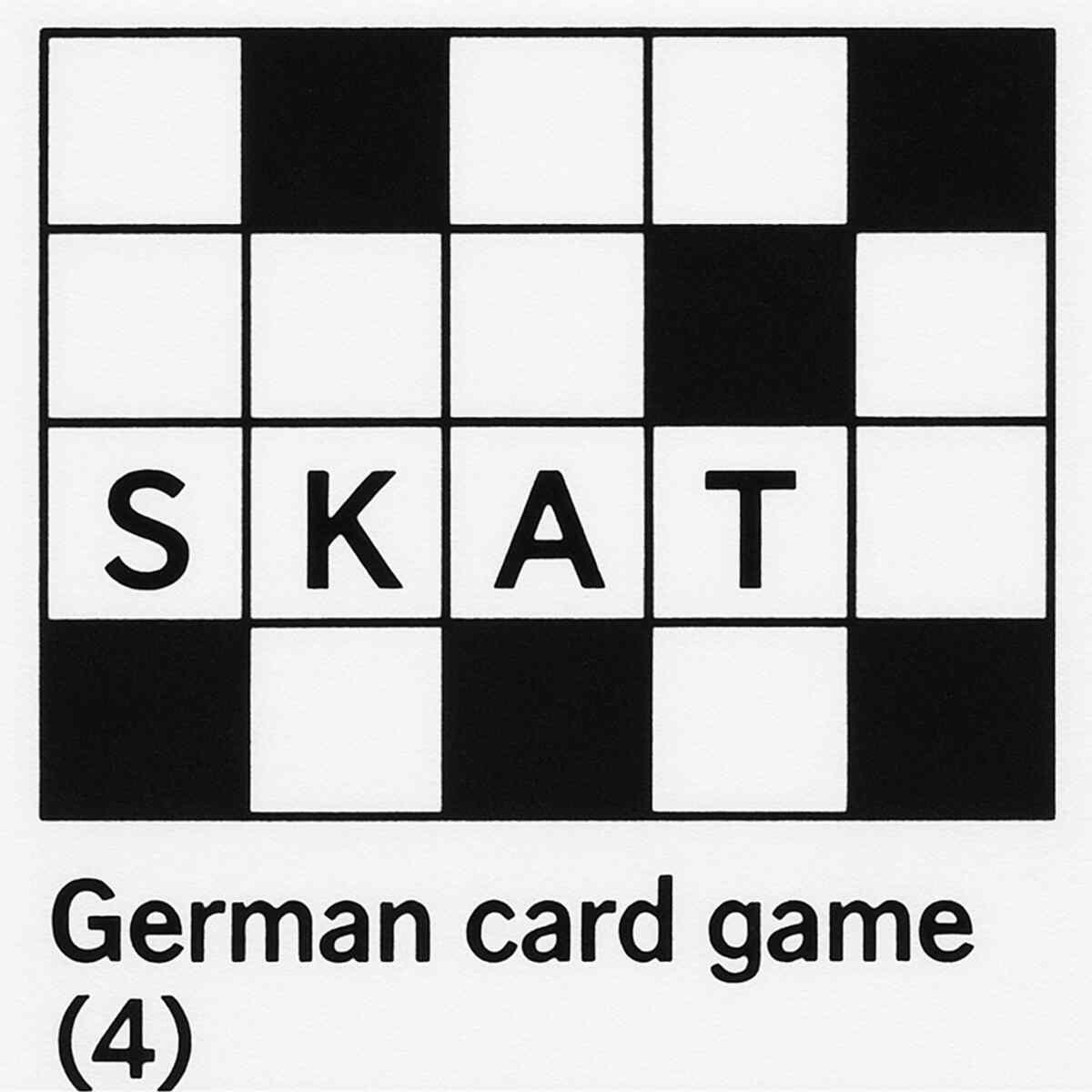
It’s a familiar feeling for any crossword solver: a clue like “German card game (4)” brings your progress to a halt. You might feel like you should know the answer, but the truth is, you’re not missing general knowledge. You’ve just run into a special category of words that puzzle makers absolutely love. To find more, check on cuan805
This special vocabulary is often called “crosswordese”—words you see far more often in puzzles than in real life. Think of them as a constructor’s “greatest hits.” They are chosen not because they’re common, but because their valuable letter combinations are essential tools for building a tight, interlocking grid. Learning to spot them is key to solving faster.
Take a classic answer like SKAT. According to puzzle construction analysis, makers love it not because it’s a household game, but because its mix of a high-value ‘K’ with common letters is incredibly useful. The same goes for EUCHRE, a vowel-rich six-letter word you’ll often see for clues about a trick-taking card game. Understanding card game crossword hints isn’t about game knowledge; it’s about recognizing the constructor’s favorite tools.
The Most Common 3, 4, and 5-Letter Card Game Answers
While you might be familiar with POKER or SOLITAIRE, puzzle creators rely on a special deck of shorter, more obscure card games to make their grids work. These words are prime examples of the “crosswordese” we mentioned—words packed with useful, common letters that you’ll see far more often in a puzzle than at a game night. Committing just a handful of these to memory will give you a huge advantage, especially in early-week puzzles.
When you’re stumped by a clue for a short card game, it’s almost always one of these repeat offenders. Here are the most valuable ones to know:
- LOO (3 letters): Often clued as “Old-fashioned card game,” Loo is a simple, centuries-old trick-taking game. Its two vowels make it a constructor’s dream.
- FARO (4 letters): Look for clues involving the “Old West” or “saloon game.” Faro was a popular American frontier betting game, and its name fits perfectly into four-letter slots.
- SKAT (4 letters): If the clue mentions “German card game,” your answer is almost certainly Skat. It’s a three-player game beloved in Germany, but in crosswords, it’s loved for its S, K, and T.
- OMBRE (5 letters): This is a hall-of-fame crossword answer. Clues often get specific, like “Game in Pope’s ‘The Rape of the Lock’.” You’ll likely never play it, but its vowel-consonant pattern (O-M-B-R-E) is pure gold for puzzle design.
By recognizing the patterns in these clues—a historical reference for Loo or a geographical one for Skat—you can turn a head-scratcher into a confident entry. These short words are the building blocks of many puzzles, and now they’re part of your solving toolkit.
Mastering the 6+ Letter Games: From Euchre to Pinochle
As you move into the bigger slots of a Friday or Sunday puzzle, the card game answers get longer, but they follow the same principle: constructors have favorites. While you won’t see these as often as SKAT or LOO, knowing the handful of 6-to-8-letter mainstays can be the key to cracking open a whole corner of the grid. They often come with very specific clue keywords you can learn to spot instantly.
Here are the most common long-form answers that will boost your solving stats:
- EUCHRE (6 letters): A frequent answer for clues like “Midwest trick-taking game” or “Game similar to Whist.” Its five unique letters and common vowels make it incredibly versatile for puzzle makers.
- PIQUET (6 letters): Much like OMBRE, this is a “crossword-only” game for most solvers. Expect to see it clued as an “Old French card game” for two players.
- CANASTA (7 letters): This one often appears with clues mentioning “rummy family” or its Uruguayan origins. If the clue involves creating “melds” (sets of cards), Canasta is a strong possibility.
- PINOCHLE (8 letters): The most common eight-letter card game by a mile. If you see the clue “Game with melds,” this is almost always the crossword puzzle answer you’re looking for.
You may have noticed that terms like “trick-taking” and “melds” appear in clues for different games. These aren’t just random descriptions; they are specific categories of card games. Understanding what a constructor means when they ask for a “trick-taking game” gives you another powerful tool for narrowing down the possibilities.
What Is a ‘Trick-Taking’ Game in a Crossword Clue?
That phrase you saw—”trick-taking game”—is one of the most helpful descriptors in a crossword. The concept is simple: in games like Hearts or Bridge, players each play one card per round. The person who plays the highest card wins that round, or “takes the trick.” The game is just a series of these small contests to determine an overall winner. You don’t need to know the rules, just that this term points to a specific style of play.
To add a twist, many of these games feature a “trump suit.” A clue might even mention it directly. This just means one suit is designated as the most powerful for that hand, able to beat even the highest cards from other suits. Think of it as a secret weapon that adds a layer of strategy to the game. When you see “trump” in a clue, it’s a dead giveaway you’re in trick-taking territory.
For your puzzle, this is a fantastic shortcut. A “trick-taking” clue instantly eliminates answers like POKER or CANASTA. It lets you zero in on the small family of correct possibilities, including EUCHRE, SKAT, or SPADES. This simple term acts as a powerful filter, turning a vague clue into a much more solvable one, especially when you’re faced with the more obscure game names.
Decoding Obsolete and Foreign Card Game Clues
Sometimes a clue about a card game seems to come from way out of left field. Instead of describing how the game is played, it might hint at its history or country of origin. This is a common tactic constructors use for older or foreign games that are crossword staples. You’re not expected to be a historian; you just need to know a few key associations that turn these tricky clues into gimmes.
Take the four-letter game SKAT, for example. It’s far more likely to be clued with its geography than a description of play. If you see a hint like “German three-handed game” or simply “Card game from Germany,” you can confidently write in SKAT. The German connection is its primary identity in the crossword world.
Similarly, other obscure games have their own specific trivia attached. You’ll recognize the five-letter game OMBRE from its famous appearance in Alexander Pope’s poem “The Rape of the Lock.” The six-letter game ECARTE is another one to file away; its French origins often feature in clues, as does its name, which means “discarded.”
Think of these games as bits of crossword trivia—once you learn the specific hook, you’ve unlocked the answer for good. But these names aren’t the only card-related words you’ll face. Often, the answer isn’t a game at all, but a piece of game terminology.
When the Answer Is Card Game Terminology, Not a Name
Just when you think you’ve got the game names down, a puzzle might ask for a specific action or term from a game. Clues like “Pinochle combination” or “Bridge maneuver” aren’t looking for a game title, but for the vocabulary used while playing. Recognizing this shift is key, as constructors have their favorite terms just like they have their favorite games.
Many of these terms appear so often they become “crosswordese.” Knowing them can turn a head-scratcher into an easy fill. Here are four essential terms to add to your solver’s toolkit:
- FINESSE: A seven-letter word for a risky, strategic play, most often associated with the game of Bridge.
- MELD: The standard four-letter answer for clues about combining cards into sets, especially in games like Pinochle and Canasta.
- RENEGE: A six-letter verb meaning to fail to follow suit when you were able to, a cardinal sin in many trick-taking games.
- KITTY: A cute four-letter name for the pile of extra cards or money in the center of the table.
Of all the card game terminology in crosswords, FINESSE is a true superstar. Its friendly letters and specific meaning make it a constructor’s favorite. Likewise, if you see a clue about combining cards, MELD is almost always the go-to answer for pinochle. By adding these key terms to the game names you already know, you’re building a powerful arsenal for solving.
Your New Action Plan for Any Card Game Clue
You’re no longer at the mercy of an obscure card game clue. Where you once saw a frustrating blank space, you now recognize a pattern—a set of “crosswordese” favorites that constructors rely on. This knowledge transforms a guess into a confident, logical deduction, turning a common puzzle roadblock into a familiar checkpoint.
With this insight, you now have a repeatable strategy. The next time you encounter a card game clue, run through this simple process:
- Check the Letter Count: The number of squares is your single biggest hint.
- Scan for Descriptors: Look for keywords like ‘trick-taking,’ ‘casino,’ or ‘obsolete.’
- Run Through the ‘Greatest Hits’: Mentally check off the common answers like LOO, SKAT, OMBRE, and EUCHRE.
- Consider Terminology: If it’s not a game name, it might be a term like MELD or KITTY.
And if you’re still stumped? Don’t just search for the answer. Using a crossword solver can be a powerful learning tool. When it reveals a new game like PIQUET, you’re not just finishing the puzzle; you’re adding a new word to your arsenal for next time. You’ll soon find that even the most creative crossword clues for card games are no longer intimidating—they’re an invitation to prove your new expertise.
